
Stone-Veneer Cladding
Natural stone veneer cladding for Ghana — granite, sandstone and slate veneer mechanically anchored and adhered to feature façades, entrances and plinths, engineered as a system for weathering and durability and handed over in writing. Cladding Ghana, since 1983.
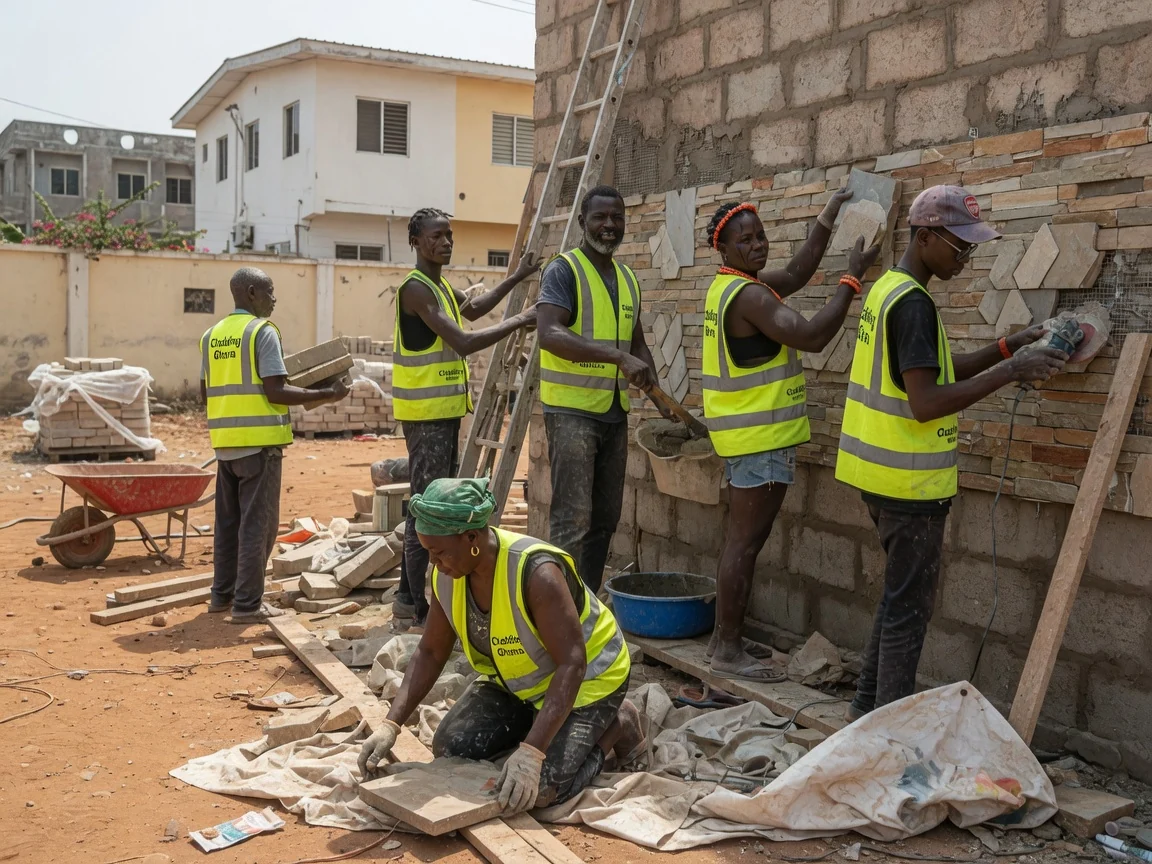
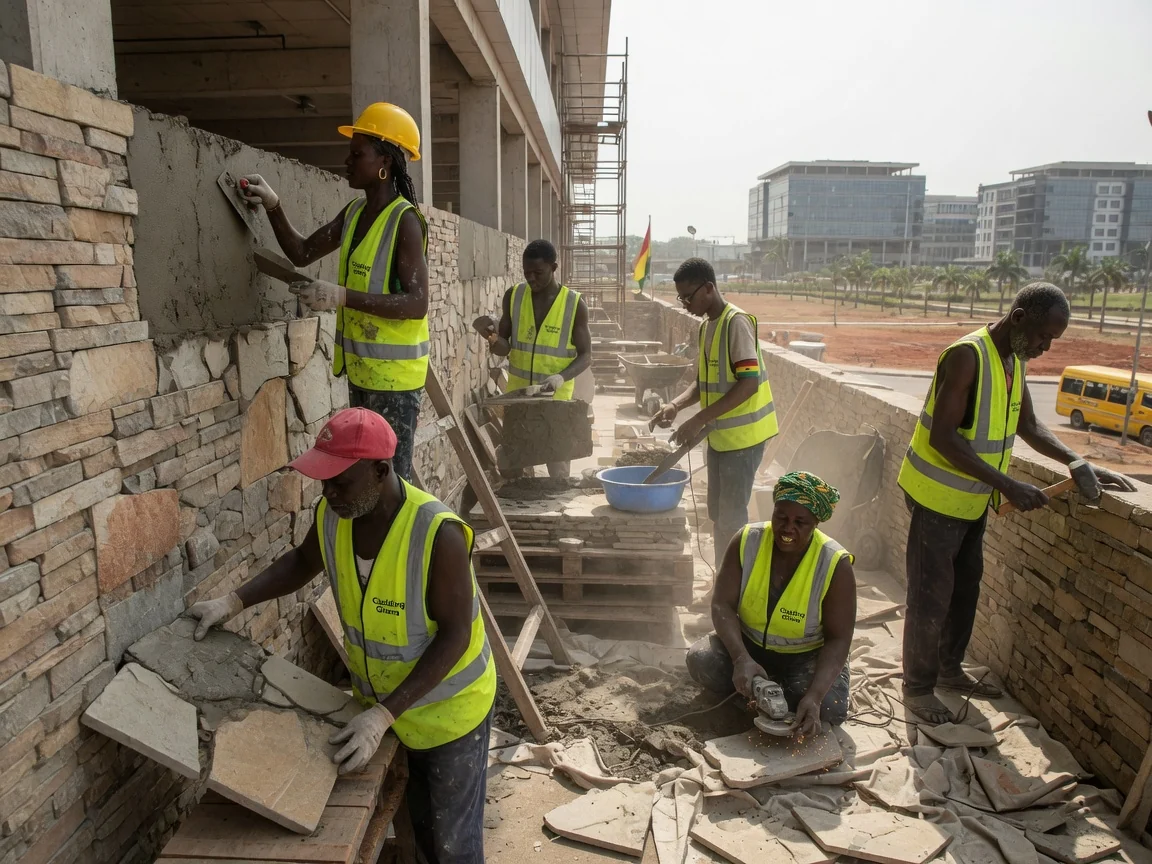
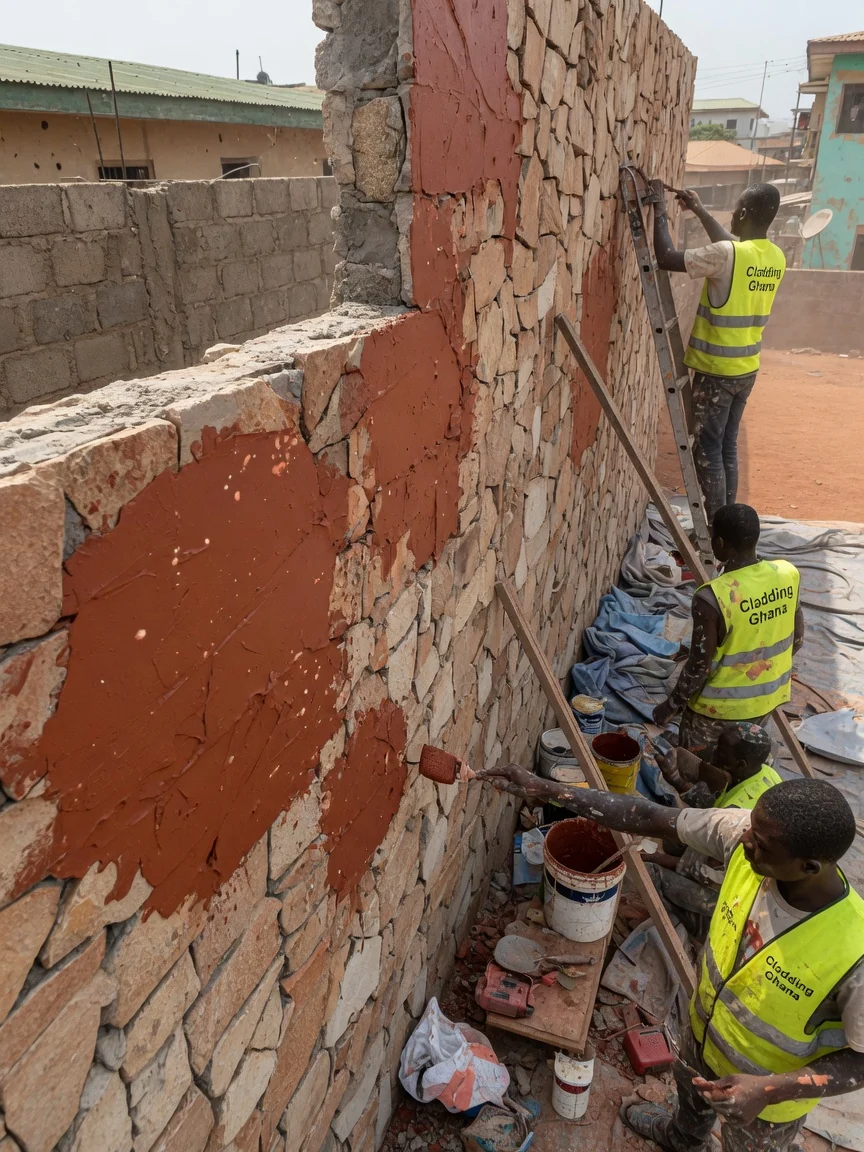
Stone-veneer cladding is a façade of natural stone — granite, sandstone or slate cut thin and mechanically anchored and adhered to the wall — for feature elevations, entrances, lobbies and plinths that need the weight, depth and permanence of real stone. As a broad cladding-systems specialist, Cladding Ghana’s job is not to push stone — it is to tell you where stone earns its place on the building and then to engineer the fixing so it stays there. Stone is heavy, so on a stone façade the fixing is the engineering.
Why Natural Stone, and Where It Earns Its Place
Stone is chosen for what no manufactured board fully replicates: real depth, real weathering, and a permanence that reads as quality. But those qualities come with weight and cost, so the honest position is selective — stone most often belongs on the feature façade, the entrance, the lobby and the plinth, where its presence is justified, rather than across an entire elevation where a lighter board system may serve the building better. The substrate decision comes first; once stone is chosen, the mechanical anchoring and adhesion that hold heavy panels safely to the wall are the real work.
Choosing Your Stone & Fixing System
Granite Veneer
The hardest and most weather-resistant stone, with very low porosity. The right choice for high-traffic entrances, plinths and exposed elevations where durability and minimal maintenance matter most.
Sandstone Veneer
A warmer, textured, naturally varied stone. More porous than granite, so it benefits from a breathable sealer, and best suited to feature façades and elevations where its character is the point.
Slate Veneer
A fine, layered, dark stone for feature panels and accent walls, giving a distinctive riven or honed finish.
Mechanically Anchored System
Anchors, cramps or a support sub-frame carry the stone’s weight back to the structure — the load-bearing method for larger panels and full feature façades.
Adhered (Adhesion) System
Mortar or adhesive bonds thinner veneer to a sound substrate, usually combined with mechanical restraint for safety on anything but the smallest, lowest panels.
Stone Veneers Compared
| Stone | Hardness | Porosity | Sealing | Best for |
|---|---|---|---|---|
| Granite | Hardest | Very low | Often little/none | Entrances, plinths, exposed walls |
| Sandstone | Medium | Higher | Breathable sealer advised | Feature façades, warm finishes |
| Slate | Layered | Low–medium | Light, if any | Accent panels, riven finishes |
(Properties are qualitative and vary by quarry and grade; we select and document the actual stone on survey.)
How We Specify and Install a Stone-Veneer Façade
- Establish the requirement and select the stone — survey the elevation, decide where stone earns its place, and choose granite, sandstone or slate against the exposure.
- Design the fixing — anchored and adhered — mechanical anchors carry the load, adhesion stabilises the panel; panel size, anchor type and substrate designed together.
- Engineer the system — substrate, anchors, mortar or adhesive, cavity, flashings and movement joints engineered as one.
- Install, inspect and hand over the paper trail — multi-stage QC, stone source, fixing schedule and sealing specification handed to the owner.
Materials & Real Standards
- Material properties — natural stone is graded qualitatively by hardness, porosity and weathering: granite is hardest with very low porosity, sandstone is warmer but more porous, slate is layered and fine. These are intrinsic stone characteristics, not a single test number, and we describe them honestly and select against them.
- Fixing principle — veneer is held by mechanical anchoring (anchors, cramps or a support system carrying the load to the structure) combined with adhesion (mortar or adhesive); the balance is engineered to the stone weight, panel size and substrate.
- Façade performance — a stone rainscreen or cavity build-up can be assessed for air leakage (ASTM E283), water penetration (ASTM E331) and structural / wind load (ASTM E330); we specify and document against the standard relevant to the project.
- Sealing & weathering — porous stones may need a breathable sealer with a stated re-application interval; we specify whether sealing is required and the maintenance plan rather than assuming it.
What Affects the Cost
- The stone chosen (granite, sandstone or slate; thickness, finish and quarry/source)
- The fixing system (a fully mechanically anchored façade costs more than an adhered feature panel, and is required where weight and safety demand it)
- The substrate, cavity detailing, flashings, movement joints and any sealing
- Area, building height, and access
Stone is heavier and more involved than board systems, so the installed figure is quoted on survey — the stone, the fixing and the access decide it. The full cost picture and the comparison against other substrates are on the Cladding Cost Guide — Ghana and Cladding Types Compared.
Applications Across Ghana
- Institutional and corporate entrances and lobbies (Cantonments, Ridge) where stone signals permanence
- Feature façades and plinths on banks, HQs and hospitality buildings in Airport City and the CBD
- Residential feature walls and entrances in East Legon and the prime suburbs
- Heritage and institutional re-facing where natural stone is specified
- Prestige commercial and residential projects in Kumasi and Takoradi
Areas We Serve
Cladding Ghana specifies and installs natural stone veneer façades across Greater Accra — Airport City, Ridge, Cantonments, the CBD, East Legon, and Tema — plus Kumasi and Takoradi.
Related Services
- Aluminium Composite Cladding — ACP/ACM panel façades and fire-core choice
- Ceramic Ventilated Façade — ceramic rainscreen systems
- Fiber-Cement Cladding — non-combustible board and plank façades
- HPL Cladding — high-pressure laminate panels
- Terracotta Rain-Screen — baked-clay rainscreen
- Zinc & Copper Standing Seam — metal standing-seam façades
- Fast-Track Commercial Cladding — programme-driven commercial work
- Cladding Types Compared — substrate comparison matrix
- Cladding Cost Guide — Ghana — GH₵/US$/CFA, material vs installed
Frequently Asked Questions
How is stone-veneer cladding fixed to a wall? Natural stone is heavy, so the fixing is the engineering. Veneer is held by mechanical anchoring — anchors, cramps or a support system carrying the weight to the structure — combined with adhesion (mortar or adhesive) that stabilises the panel. The balance depends on the stone weight, panel size and wall, and it is designed before any stone is lifted.
Which natural stones are used for veneer cladding? Granite is hardest and most weather-resistant with very low porosity, for entrances and plinths; sandstone is warmer and textured but more porous and benefits from sealing; slate gives a fine, layered, dark finish for feature panels. We select the stone against the elevation, the exposure and the maintenance plan, and document the source.
Does stone veneer need sealing in Ghana’s climate? It depends on the stone. Dense granite often needs little or no sealing; more porous sandstone benefits from a breathable sealer to resist water and staining, especially on exposed coastal elevations. We specify whether a sealer is needed, which type, and the re-application interval in writing.
Is stone veneer cladding suitable for full façades or just features? Both, but the decision is honest. Stone can clad a full elevation, but it is heavier and costlier than board systems, so it most often earns its place on feature façades, entrances, lobbies and plinths. As a substrate-agnostic specialist, we tell you where stone is worth it and where another system serves the building better.