Ceramic Ventilated Facade
A ceramic / porcelain ventilated rainscreen façade for Ghana — large-format porcelain to EN 14411, a back-ventilated cavity, mechanical fixing, and durability in the tropical climate. How it compares with ACP and when to choose it. Cladding Ghana, since 1983.
A ceramic ventilated façade is a rainscreen system: large-format porcelain or ceramic tiles are mechanically fixed to an aluminium sub-frame, leaving a continuous back-ventilated cavity between the tile and the building wall. It is one of the most durable façade substrates available, and the back-ventilated, back-drained cavity makes it especially well suited to Ghana’s hot, humid climate. Cladding Ghana has specified and installed façade systems across Ghana since 1983 — and as a substrate-agnostic cladding contractor, we will tell you where a porcelain rainscreen is the right choice, and where another substrate fits better.
Why a Back-Ventilated Rainscreen Performs
A ventilated rainscreen does not rely on the outer skin being perfectly sealed. Rain is shed at the porcelain face; any moisture that gets behind drains down and evaporates in the continuous cavity, which is open to ventilation top and bottom. That moving air also reduces solar heat gain into the structure. In a tropical climate, where a closed unvented cladding traps humidity against the wall, the ventilated cavity is what keeps the building fabric dry across the rainy season.
Choosing the Porcelain & Fixing
Large-Format Porcelain (Mechanical Fixing)
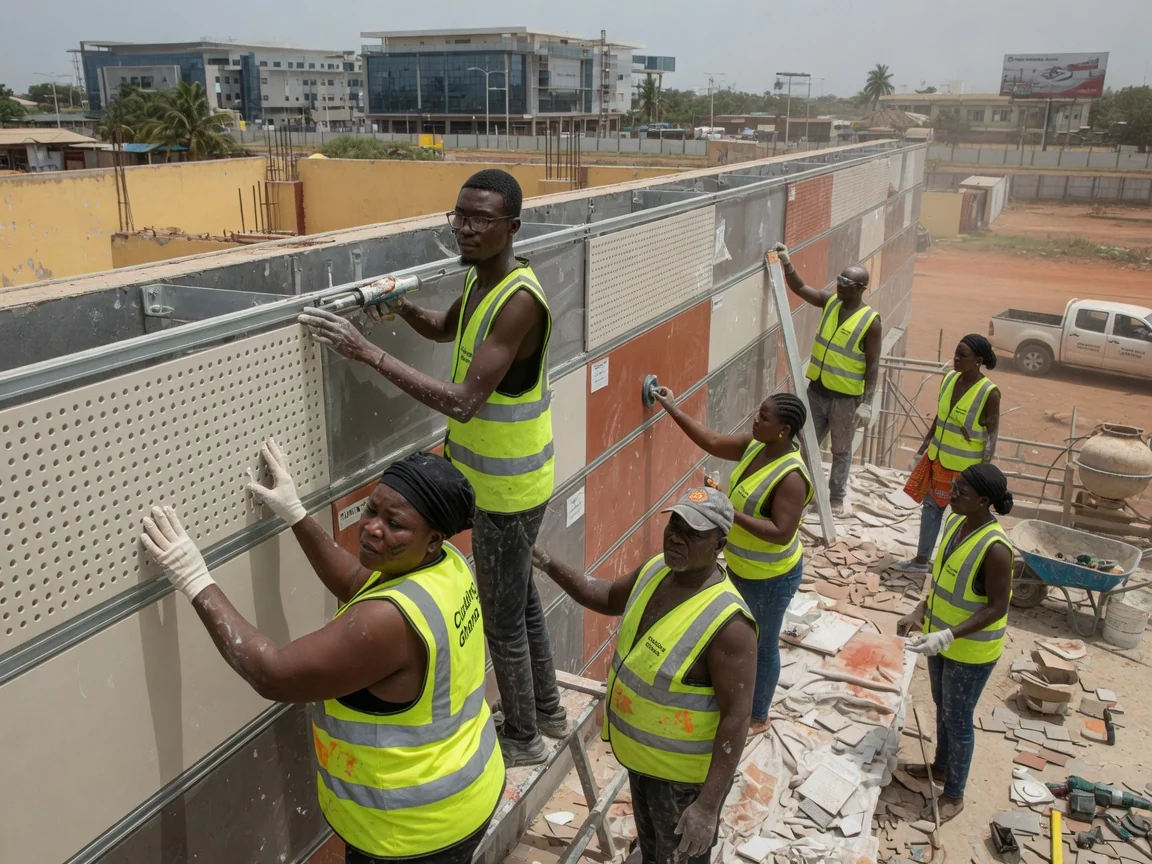
Large porcelain panels fixed to the sub-frame with concealed undercut anchors or visible mechanical clips — the premium, fully demountable rainscreen finish, with a continuous ventilated cavity behind. Porcelain offers very high surface durability, scratch and UV resistance and a natural mineral finish, and its body is non-combustible.
Through-Coloured & Thin Porcelain
Through-coloured large-format porcelain hides edge chips, and thinner reinforced porcelain reduces dead load where the sub-frame or building benefits from a lighter façade.
Ceramic Tile on Sub-Frame
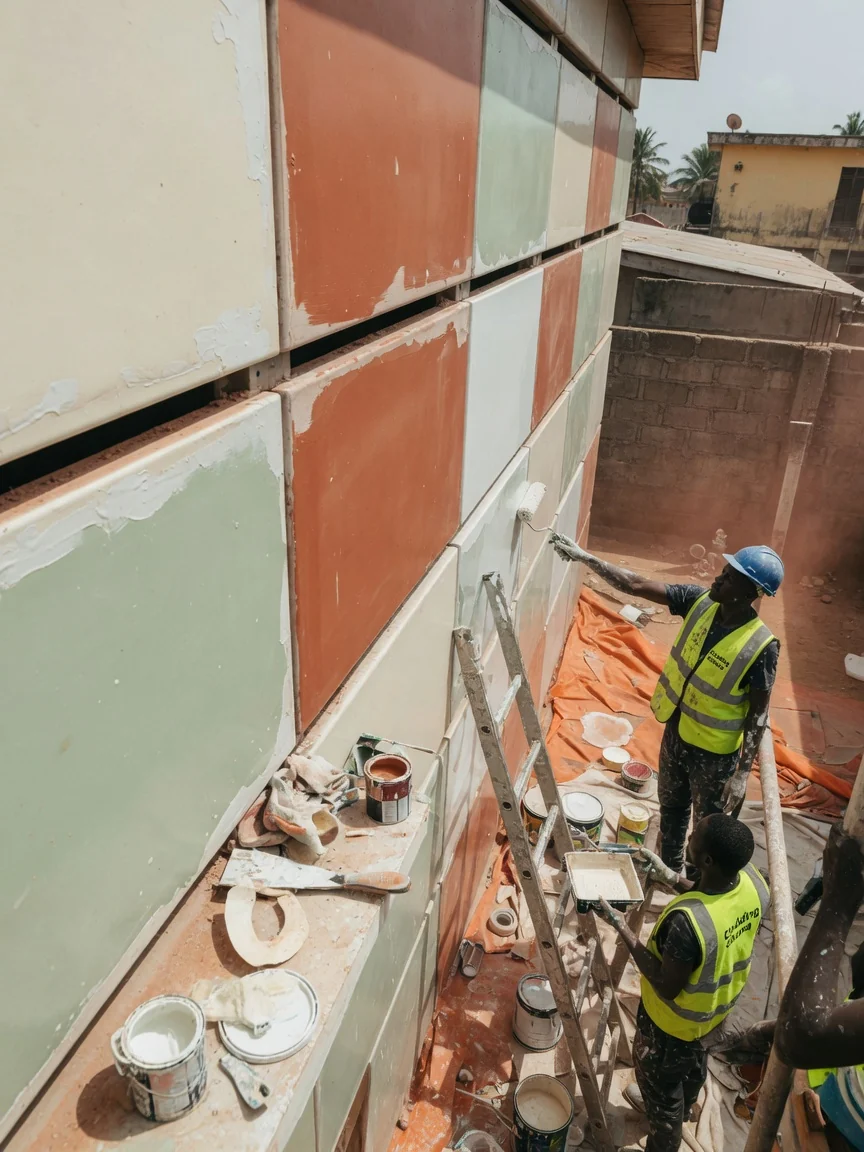
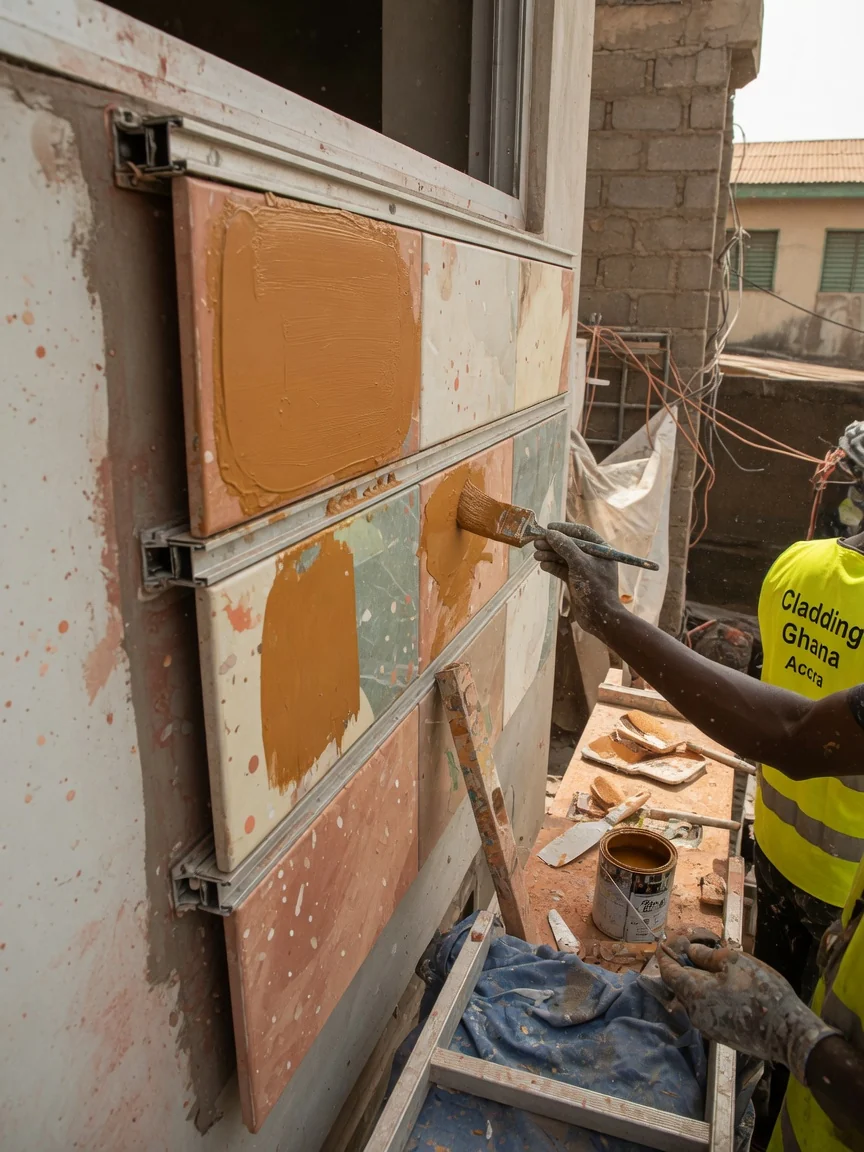
Where the project calls for a traditional ceramic finish, tiles are carried on the same ventilated aluminium sub-frame rather than bonded directly to the wall, keeping the rainscreen principle.
Porcelain Rainscreen Compared With Other Substrates
| Substrate | Weight | Surface durability | Finish | Typically chosen for |
|---|---|---|---|---|
| Porcelain / ceramic ventilated | Heavier | Very high | Natural mineral, UV-stable | Durable rainscreen, institutional, banks |
| Aluminum composite (ACP) | Light | Coating-dependent | Painted, wide colour range | Fast-track commercial, towers, signage |
| Terracotta rainscreen | Heavier | High | Natural fired clay | Premium natural façades |
| Fibre-cement | Medium | High | Painted / through-coloured | Mid-budget durable cladding |
(Performance depends on the specific product’s certification; we provide it in writing.)
How We Install a Ceramic Ventilated Façade
- Confirm porcelain rainscreen is the right substrate — weigh the building, finish and budget against ACP, terracotta, fibre-cement and stone.
- Specify the porcelain and the cavity — size, thickness, EN 14411 reference, cavity depth and fixing system written into the spec.
- Engineer the sub-frame and mechanical fixing — aluminium brackets and fixings sized for the porcelain weight and wind load, with movement joints.
- Install, inspect and hand over the paper trail — cavity and fixings inspected at each stage; porcelain data sheets handed to the owner.
Materials & Real Standards
- Large-format porcelain / ceramic — fired mineral tile, non-combustible body, high scratch and UV resistance
- EN 14411 — ceramic tiles: definitions, classification and characteristics (the porcelain itself)
- ASTM E283 — air leakage of the assembled façade
- ASTM E331 — water penetration under static pressure
- ASTM E330 — structural performance under wind load
- Back-ventilated, back-drained cavity — a continuous air gap open top and bottom, draining and evaporating any penetrating moisture and reducing solar heat gain (described qualitatively; the cavity depth and ventilation are detailed per project)
- Aluminium sub-frame & fixings — concealed undercut anchors or visible mechanical clips, sized for the porcelain dead load and the local wind load
What Affects the Cost
- The porcelain (size, thickness, finish — large-format and thin reinforced porcelain carry a premium)
- The fixing system (concealed undercut anchors cost more than visible clips)
- The sub-frame depth, cavity detailing and movement joints
- Area, building height and access
Porcelain rainscreen is a heavier, more engineered system than painted ACP, so its installed figure is genuinely on survey — the porcelain grade, fixing system, height and access decide the number, and we will not quote a per-square-metre figure blind. Indicative material references and the full cost picture are on the Cladding Cost Guide.
Applications Across Ghana
- Bank and corporate HQ façades in Airport City, Ridge and the CBD where surface durability is specified
- Hospitals, institutional and government buildings wanting a non-combustible mineral finish
- Hotels and premium commercial buildings in East Legon and Cantonments
- Re-cladding tired painted façades with a durable, demountable rainscreen
- Commercial and institutional projects in Kumasi and Takoradi
Areas We Serve
Cladding Ghana specifies and installs ceramic ventilated façades across Greater Accra — Airport City, Ridge, Cantonments, the CBD, East Legon and Tema — plus Kumasi and Takoradi.
Related Services
- Cladding Types Compared — porcelain vs ACP vs terracotta vs metal
- Cladding Cost Guide — GH₵/US$/CFA, material vs installed
- Terracotta Rain Screen — natural fired-clay rainscreen
- Aluminum Composite Cladding — light ACP/ACM façades
- Stone Veneer Cladding — natural stone finishes
Frequently Asked Questions
What is a ceramic ventilated façade? A rainscreen: large-format porcelain or ceramic tiles mechanically fixed to an aluminium sub-frame, leaving a continuous back-ventilated cavity between the tile and the wall. Rain is shed at the face, any moisture behind is drained and evaporated in the cavity, and the wall stays dry — a very durable substrate well suited to Ghana’s climate.
How is a porcelain rainscreen different from ACP cladding? ACP is a light aluminium-skinned composite; porcelain is a fired mineral tile with very high surface durability, UV resistance and a non-combustible body, but heavier and needing an engineered sub-frame. ACP is lighter, faster and more colour-flexible. We tell you honestly which suits your building.
Does a ventilated cavity matter in Ghana’s climate? Yes. The back-ventilated, back-drained cavity moves humid air and penetrating moisture out of the wall, reduces solar heat gain and keeps the substrate dry through the rainy season — exactly where a closed, unvented cladding struggles.
What standards apply to a porcelain façade? The porcelain is classified to EN 14411; the assembled façade is assessed for air leakage (ASTM E283), water penetration (ASTM E331) and wind load (ASTM E330). We document against the standard relevant to the project.