
HPL (High-Pressure Laminate) Cladding
Compact HPL (high-pressure laminate) cladding for Ghana — dense, through-coloured laminate panels mechanically fixed on a ventilated sub-frame. How HPL works, the honest fire-class question, the colour and woodgrain range, durability and what it costs on survey. Cladding Ghana, since 1983.
HPL — high-pressure laminate — is a dense, solid panel made from layers of kraft paper or wood fibre impregnated with thermosetting resin and fused under high heat and pressure into a hard, through-coloured board. As exterior compact cladding it carries a weather- and UV-resistant decorative surface and is mechanically fixed to a ventilated sub-frame as a rain-screen. The result is a flat, modern panel façade with one of the widest colour and woodgrain ranges of any cladding. Cladding Ghana has specified and installed cladding systems across Ghana since 1983, and our position on HPL is direct: we specify the right grade — including the fire grade where the building needs it — and we tell you which one you are getting.
Why HPL — and the Honest Fire Question
HPL is chosen for its flat, precise panel look, huge colour and woodgrain palette, and hard washable surface — strong on educational, commercial and institutional buildings. But there is one question that must be answered honestly: fire. Standard HPL is a resin-and-fibre composite and is combustible. Manufacturers also produce fire-rated HPL grades that achieve a better reaction-to-fire class under EN 13501-1. There is no blanket “HPL is fire-safe” claim — the grade must be specified to the building’s height, use and occupancy, and the EN 13501-1 class of the actual panel confirmed in writing. We make that a specification decision, not a price decision.
Choosing the HPL Grade
HPL is specified by grade, surface and fixing method, and the fire requirement of the building sits over all of it. The grade is chosen against the building — not against the lowest-priced standard panel.
HPL Cladding Systems
Standard Compact HPL
Dense, through-coloured compact panels with a weather- and UV-resistant decorative face, mechanically fixed to a ventilated sub-frame. The mainstream HPL façade — widest colour and woodgrain range — for buildings where a standard reaction-to-fire grade is acceptable.
Fire-Rated HPL Grade
HPL produced to a fire-rated grade that achieves a better reaction-to-fire class under EN 13501-1, specified where the building height, use or occupancy demands it. The class of the actual panel is confirmed in writing — fire grade is named, not assumed.
Visible-Fix vs Secret-Fix
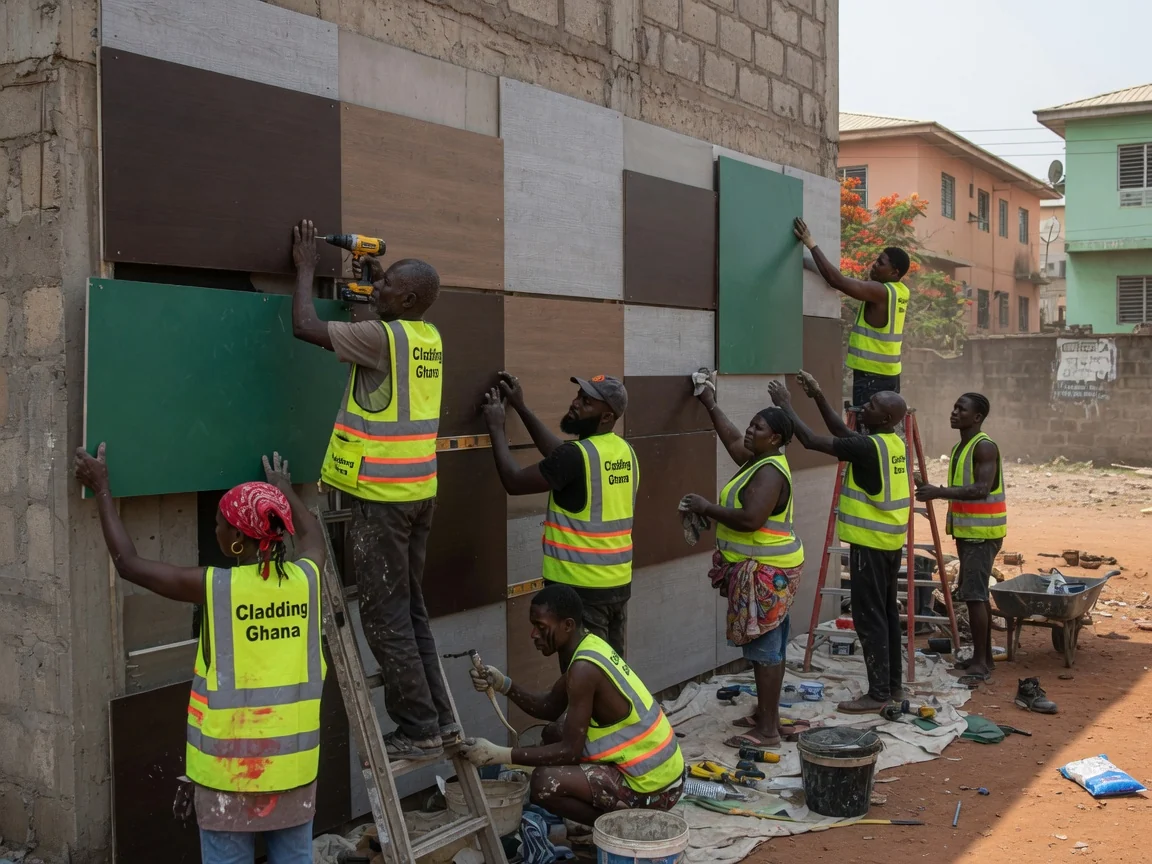
The same panels fixed two ways: visible-fixed with colour-matched rivets or screws (robust, economical, an expressed-fixing aesthetic), or secret-fixed on undercut anchors or rails (a clean face with no visible fasteners). The choice affects look, cost and maintenance access.
HPL Grades Compared
| Grade / method | Fire behaviour | Look | Specify for |
|---|---|---|---|
| Standard compact HPL | Combustible (standard grade) | Flat, full colour/woodgrain range | Low-rise where standard grade is permitted |
| Fire-rated HPL grade | Better EN 13501-1 reaction-to-fire class | Same panel look, fire-graded | Where height/use/occupancy demands it |
| Visible-fix | (per grade) | Expressed colour-matched fixings | Economy, easy access, robust detail |
| Secret-fix | (per grade) | Clean face, no visible fasteners | Premium, minimal aesthetic |
(The actual fire class is per the specific panel’s certification, which we confirm and hand over in writing — we never claim a class a panel does not hold.)
How We Install HPL Cladding
- Confirm the panel grade and fire class — HPL grade, and the fire-rated grade where required, specified to the project’s reaction-to-fire need.
- Set out the ventilated sub-frame — aluminium sub-frame on adjustable brackets, set true and plumb, leaving a continuous ventilated cavity.
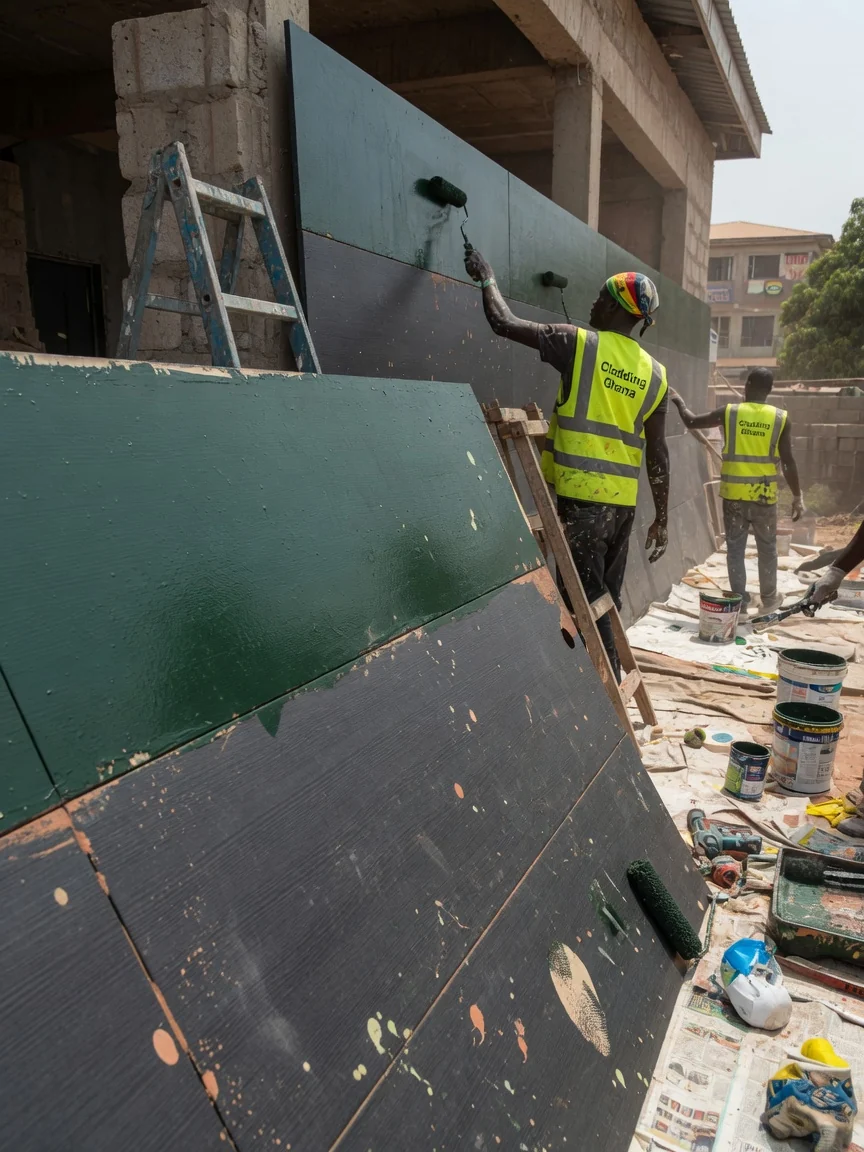
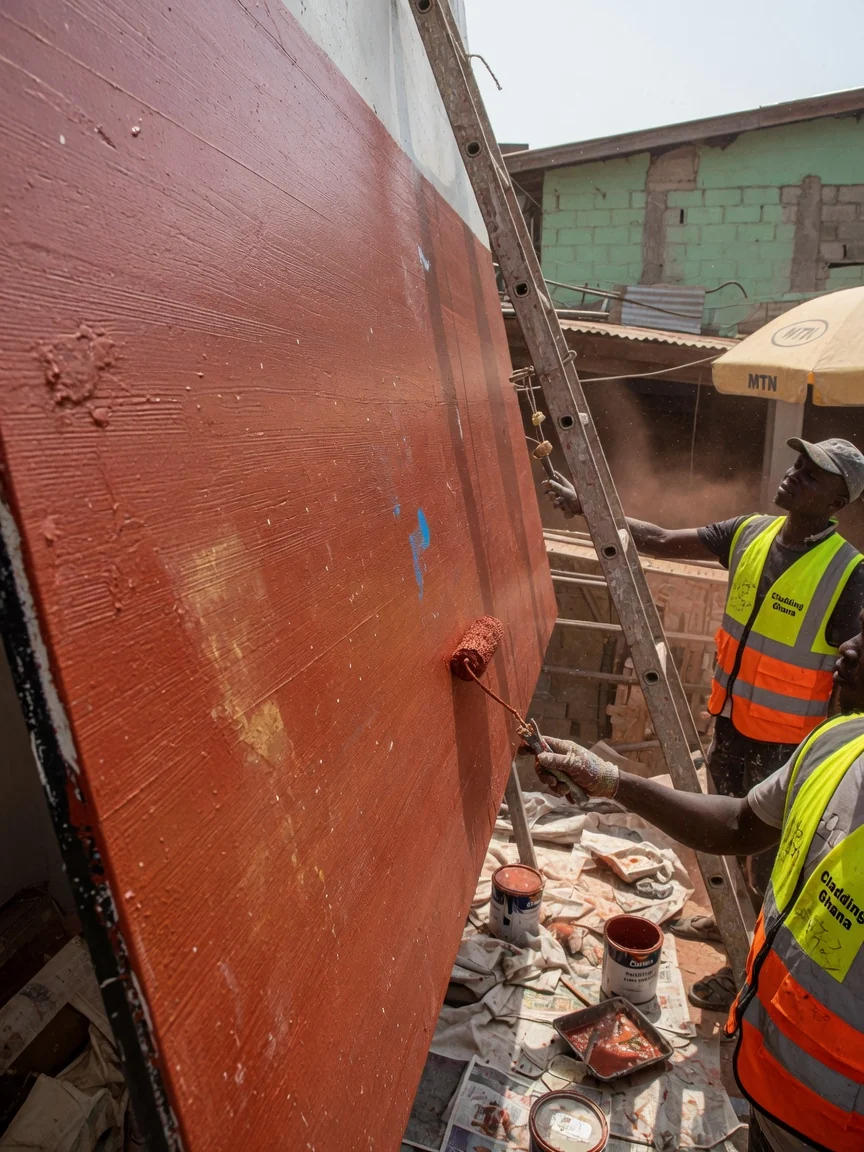
- Fix the HPL panels — mechanically fixed (visible rivets/screws or secret undercut anchors), never bonded; joints suited to the rain-screen detail.
- Detail, inspect and hand over — edges, corners, reveals and movement joints detailed; façade inspected; panel data including fire classification handed to the owner.
Materials & Real Standards
- Material — high-pressure laminate: kraft-paper / wood-fibre layers in thermosetting resin, fused under heat and pressure into a hard, through-coloured compact panel with a weather- and UV-resistant decorative face
- Reaction-to-fire — classified to EN 13501-1 (Euroclass with smoke and droplet sub-classes); standard HPL is combustible, while fire-rated HPL grades achieve a better class — the grade is specified to the building and the class confirmed in writing
- Façade performance — air leakage, water penetration and wind/structural load on the assembled rain-screen are assessed by methods such as ASTM E283 (air), ASTM E331 (water penetration) and ASTM E330 (structural/wind load)
- Fixing — mechanical fixing to a ventilated aluminium sub-frame (visible or secret); never bonded; panels individually replaceable
- We describe HPL’s durability qualitatively from the material, and we name the actual EN 13501-1 fire class of the specified panel rather than quoting a fabricated number
What Affects the Cost
- The grade — standard vs fire-rated HPL (the fire grade costs more, and is worth it where required)
- The fixing method — visible-fix vs secret-fix on undercut anchors
- Panel size, surface finish, colour or woodgrain selection
- The sub-frame, cavity detailing and building height/access
- Area, corners, reveals and movement-joint complexity
HPL is quoted on survey — the grade, fixing method, height and access decide the figure. Indicative material bands and the full cost picture are on the Cladding Cost Guide.
Applications Across Ghana
- Educational campuses and schools (East Legon, Accra) wanting a hard, washable, colourful façade
- Commercial, retail and office buildings in Airport City, Ridge and the CBD
- Healthcare and institutional buildings where a fire-rated grade is specified
- Balcony, soffit and feature-wall panels in woodgrain and solid colours
- Commercial and institutional projects in Kumasi and Takoradi
Areas We Serve
Cladding Ghana specifies and installs HPL cladding across Greater Accra — Airport City, Ridge, Cantonments, the CBD, East Legon, and Tema — plus Kumasi and Takoradi.
Related Services
- Cladding Types Compared — HPL vs ACP, ceramic, terracotta, stone and more
- Cladding Cost Guide — indicative bands, material vs installed, on-survey honesty
- Aluminium Composite Cladding — ACP panel façades and their fire cores
- Fibre-Cement Cladding — durable cement-composite boards
- Ceramic Ventilated Façade — ceramic on a ventilated cavity
- Terracotta Rain-Screen — natural fired-clay rain-screen
- Stone Veneer Cladding — natural stone on a ventilated sub-frame
Frequently Asked Questions
What is HPL cladding? High-pressure laminate — dense panels of kraft paper or wood fibre in thermosetting resin, fused under heat and pressure into a hard, through-coloured board. As compact exterior cladding it carries a weather- and UV-resistant face and is mechanically fixed to a ventilated sub-frame as a rain-screen, giving a flat panel façade with a very wide colour and woodgrain range.
Is HPL fire-rated? It depends on the grade. Standard HPL is combustible; fire-rated HPL grades achieve a better reaction-to-fire class under EN 13501-1. There is no blanket “HPL is fire-safe” answer — the grade must be specified to the building, and the EN 13501-1 class of the actual panel confirmed in writing. We specify to the requirement and hand over the classification.
How durable is HPL cladding in the Ghana climate? HPL is hard, dense, non-porous, with a weather- and UV-resistant surface, so it resists moisture, scratching and fading and washes clean. Fixed as a rain-screen on a ventilated cavity, it sheds water at the joints while air dries the wall; the finish is fused in, not painted, and a damaged panel can be replaced individually.
What does HPL cladding cost in Ghana? HPL sits in the mid-to-upper range — generally above basic ACP, below stone or terracotta — and a fire-rated grade costs more. The installed figure depends on grade, fixing method, sub-frame, height and access, so we quote on survey — see the cost guide for indicative bands.