
Fast-Track Commercial Cladding
Fast-track commercial cladding delivery in Ghana — prefabrication, phased install and a building made watertight fast, without trading away the specification. Cladding Ghana compresses the programme through method, not corner-cutting, and hands over the spec in writing. Since 1983, across Ghana.
Fast-track commercial cladding is about speed to completion without trading away the specification — taking time out of the programme through prefabrication, parallel working and a phased install, not by fitting a cheaper panel. It is the delivery lane chosen where an opening date, a fit-out start, or a multi-property rollout depends on the façade being finished fast. Cladding Ghana has specified and installed cladding systems across Ghana since 1983, and our position on speed is simple: the programme gets compressed by method, the specification does not.
Why Method, Not Corner-Cutting, Is the Whole Decision
The fast way and the cheap way look the same on a programme bar chart but are opposites in practice. Genuine fast-track buys time by moving work off the critical path — prefabricating panels and sub-frame off site while the structure is still rising, then phasing the install to close the envelope early. The false economy buys apparent speed by thinning the specification: a lighter panel, a skimped sub-frame, fewer fixings — which costs the building later. Choosing fast-track is choosing the first path, and it has to be set up deliberately, before the clock starts, by locking the specification so prefabrication can begin.
How We Compress the Programme
Specification Locked Early
Speed comes from certainty. We fix the cladding system, panels, sub-frame and details up front so long-lead material can be ordered and fabrication can begin in parallel — rather than the programme stalling while decisions are made on site, which is where most cladding delays actually originate.
Off-Site Prefabrication
Panels, brackets and sub-frame are fabricated and assembled off site, in parallel with the building structure, under controlled conditions. Prefabrication takes work off the critical path and out of the weather, so cladding components arrive ready to fix and on-site time is cut to assembly.
Phased, Watertight-First Install
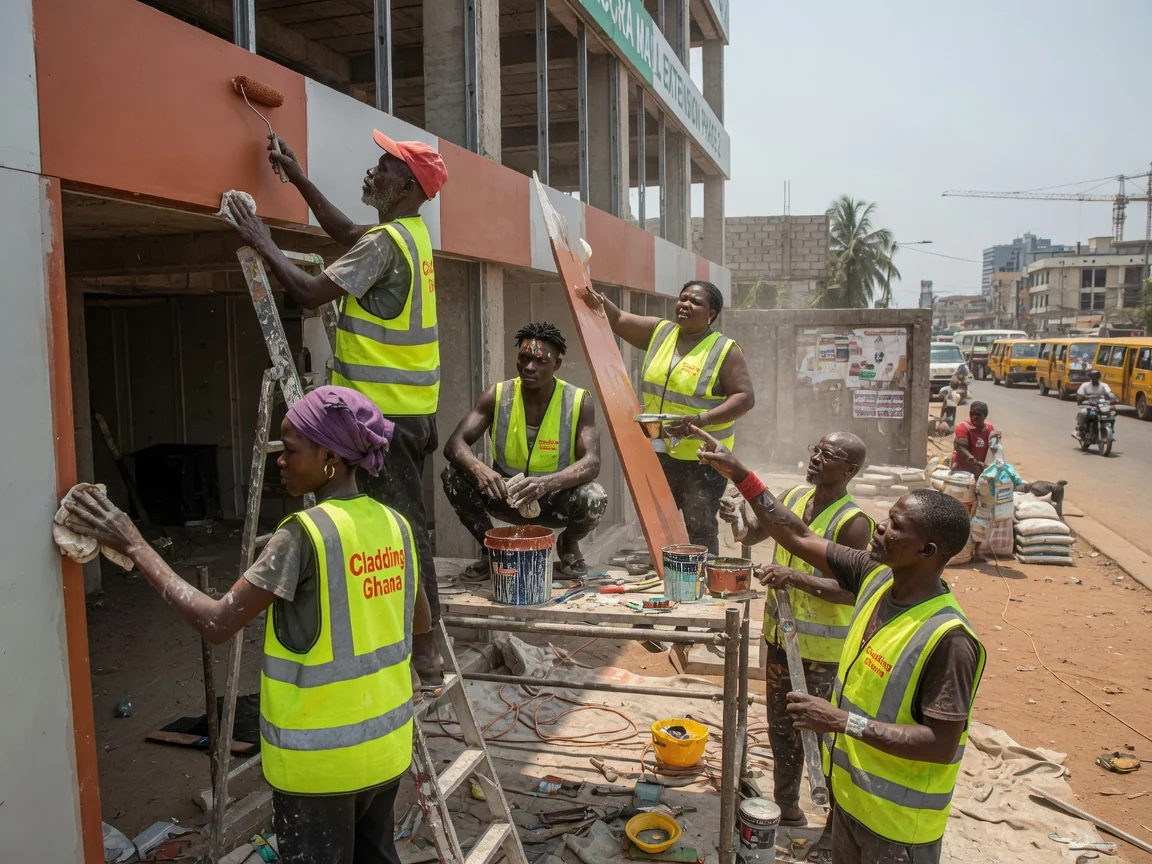
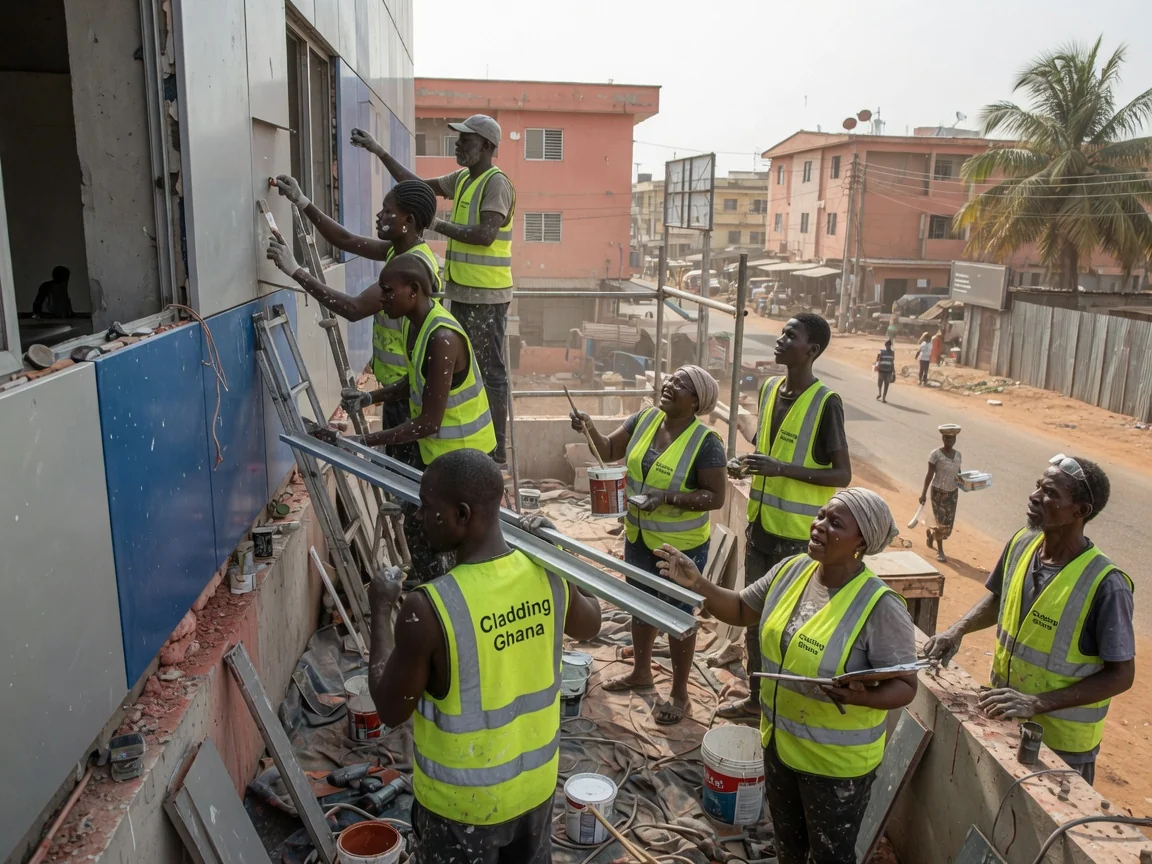
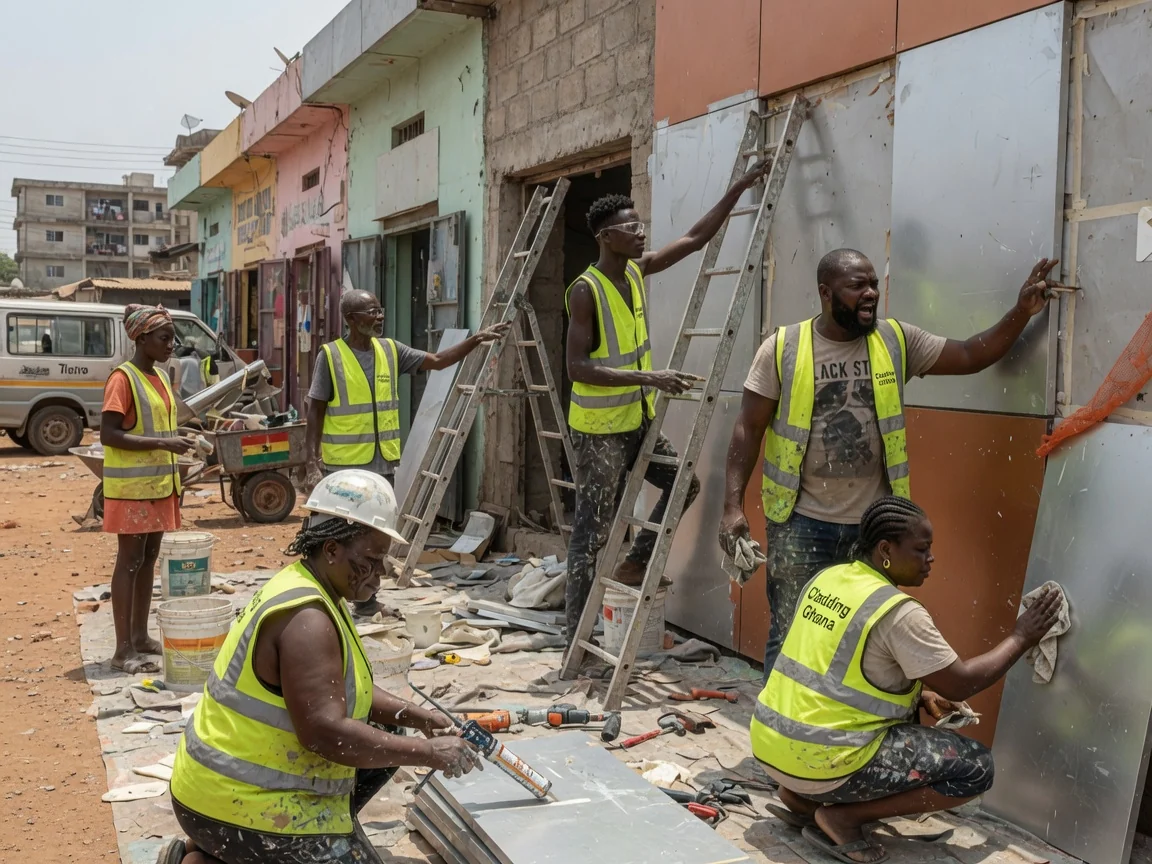
The install is sequenced to make the building watertight as early as possible — closing the envelope so fit-out and following trades can start inside — then the finished façade is completed by phases. Getting watertight first often unlocks more programme for the whole project than rushing the final finish.
Multi-Property Rollout
The same prefabricated, phased method scales across a portfolio — a chain, a campus or a multi-site rollout — delivering a consistent specification and finish on a repeatable, compressed programme across every property.
Standard vs Fast-Track Delivery Compared
| Standard programme | Genuine fast-track | False “fast” (avoid) | |
|---|---|---|---|
| Where time is saved | — | Prefab + parallel + phasing | Thinner spec, fewer fixings |
| Specification | Full | Full, locked early | Reduced |
| Fabrication | Largely on site / sequential | Off site, in parallel | Whatever is quickest |
| Install sequence | Conventional | Watertight-first, phased | Rushed final finish |
| Hand-over paper trail | Yes | Yes — same as standard | Often none |
(Fast-track gains time from method, not from reducing the specification; the written hand-over is identical to a standard-programme job.)
How We Deliver a Fast-Track Programme
- Lock the specification before the clock starts — system, panels, sub-frame and details fixed so long-lead material can be ordered and prefabrication can begin.
- Prefabricate off site while the structure rises — panels, brackets and sub-frame assembled off site in parallel, arriving ready to fix.
- Phase the install to get watertight first — close the envelope early so following trades start inside, then complete the façade by phases.
- Inspect, snag and hand over in writing — each phase inspected as it completes, with panel data sheets and the as-built specification handed over.
Materials & Real Standards
Fast-track is a delivery method, so the standards that apply are the same ones that govern any properly specified façade — speed never changes what the building has to meet:
- The specified cladding system — whatever substrate is chosen (ACP, fibre-cement, terracotta, stone veneer, metal) is delivered to its full specification; fast-track changes the programme, not the panel.
- Façade performance — the installed envelope can be verified against ASTM E283 (air leakage), ASTM E331 (water penetration) and ASTM E330 (structural wind load), exactly as a standard-programme façade would be.
- Structural framing — where the cladding is carried on an engineered aluminium or steel sub-frame, that framing is executed to EN 1090 (CE conformity for structural metalwork), prefabricated or not.
- The paper trail — panel data sheets, finish references and the as-built specification are handed over for the compressed programme exactly as for a standard one, so the owner can prove the spec was not compromised.
Where the chosen panel is an aluminium composite, the fire core (PE/FR/A2) and its EN 13501-1 classification are specified and documented in full — a compressed programme is never a reason to skip the core disclosure.
What Affects the Cost
- The cladding system specified — the substrate and panel grade are the main driver, exactly as on a standard programme
- The degree of prefabrication and the logistics of off-site fabrication and delivery
- The number of phases and the access and sequencing the programme requires
- Multi-property rollouts, where a repeatable specification can improve overall value
- Area, building height, and access
Fast-track façade work is quoted on survey — the system, the programme and the access decide the figure. Indicative material references and the full cost picture are on the Cladding Cost Guide for Ghana.
Applications Across Ghana
- Commercial buildings with a fixed opening or hand-over date driving the programme
- Retail, hospitality and office fit-outs where the façade must be watertight before interior trades start
- Multi-property and chain rollouts needing a consistent specification across sites
- Phased re-cladding of occupied buildings, where the work has to be sequenced around use
- Corporate and institutional projects in Airport City, Ridge, the CBD and Tema
- Fast-programme commercial projects in Kumasi and Takoradi
Areas We Serve
Cladding Ghana delivers fast-track commercial cladding across Greater Accra — Airport City, Ridge, Cantonments, the CBD, and East Legon — plus Tema, Kumasi and Takoradi.
Related Services
- Cladding Types Compared — choosing the substrate the programme will deliver
- Aluminium Composite Cladding — ACP panel façades
- Fiber-Cement Cladding — robust fibre-cement façades
- Zinc & Copper Standing-Seam — premium architectural metal
- Cladding Cost Guide — GH₵/US$/CFA, material vs installed
Frequently Asked Questions
What is fast-track commercial cladding? It is a delivery approach that compresses the cladding programme through method — locking the specification early, prefabricating off site in parallel with the structure, and phasing the install to get watertight fast — rather than by cutting the specification. The approach for tight opening dates, fit-out starts and multi-property rollouts.
Does going fast mean a lower-quality façade? No. Fast-track gains time from prefabrication and parallel working, not from a cheaper panel or thinner sub-frame. The specification is locked first and built to in full, and the same written specification and data sheets are handed over as on a standard programme.
How does prefabrication speed up a cladding job? Fabricating panels and sub-frame off site means they are made while the structure is going up rather than after it. Work moves off the critical path and out of the weather, components arrive ready to fix, and on-site time is cut to assembly — which is where most of the saving comes from.
What does “watertight first” mean for my programme? It means we close the building envelope as early as possible so the interior is protected and following trades can start inside, then complete the finished façade by phases. Getting watertight early often unlocks more programme for the whole project than rushing the final finish.