Terracotta Rain-Screen
Terracotta rain-screen cladding for Ghana — natural fired-clay baguettes and tiles on a back-ventilated cavity, mechanically fixed to an engineered sub-frame. How the system works, how it weathers, the colour and texture range, and what it costs on survey. Cladding Ghana, since 1983.
A terracotta rain-screen is a façade of natural fired-clay tiles or extruded baguettes, mechanically fixed to a sub-frame in front of the structural wall, with a ventilated air cavity behind. The clay is the weathering and architectural skin; the wall behind carries the load; and the open joints plus the cavity let rain drain and air move — which is what makes it a rain-screen rather than a sealed wet cladding. Cladding Ghana has specified and installed cladding systems across Ghana since 1983, and terracotta is our material of choice where a building wants a warm, natural, long-life façade.
Why a Back-Ventilated Terracotta Façade
The performance of this system is not in the tile alone — it is in the cavity. Rain that crosses the open joints is drained and evaporated inside the ventilated gap instead of soaking into the wall, and the moving air carries away heat and moisture. In Accra’s humidity and on the coast at Takoradi, that keeps the structural wall dry and reduces heat gain into the building. And because the terracotta is fired clay, the colour is through the material — it does not fade, corrode or rot under UV — so the façade ages gracefully rather than degrading.
Choosing the Terracotta Format
Terracotta is specified by body, format and texture, and those three choices set both the look and the cost. The decision is made against the building, the exposure and the budget — not against the lowest price.
Terracotta Rain-Screen Systems
Terracotta Tiles (Flat Panels)
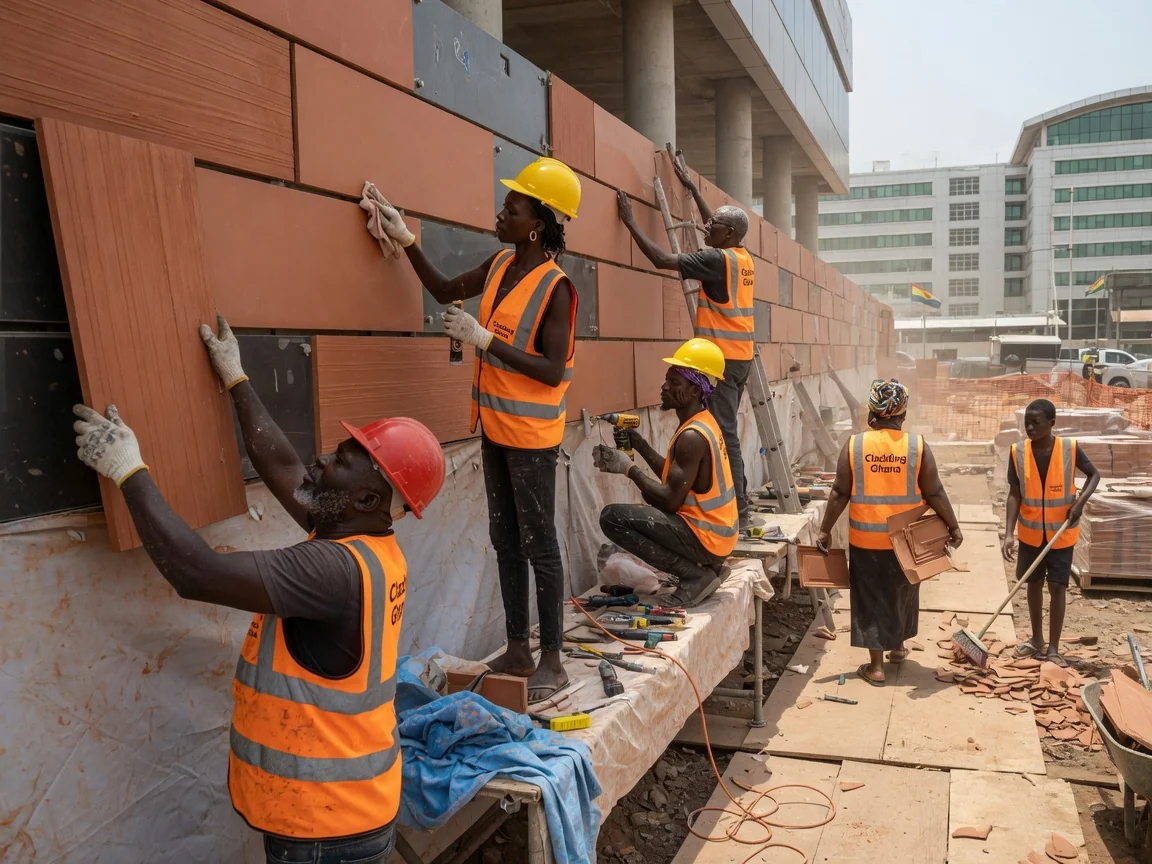
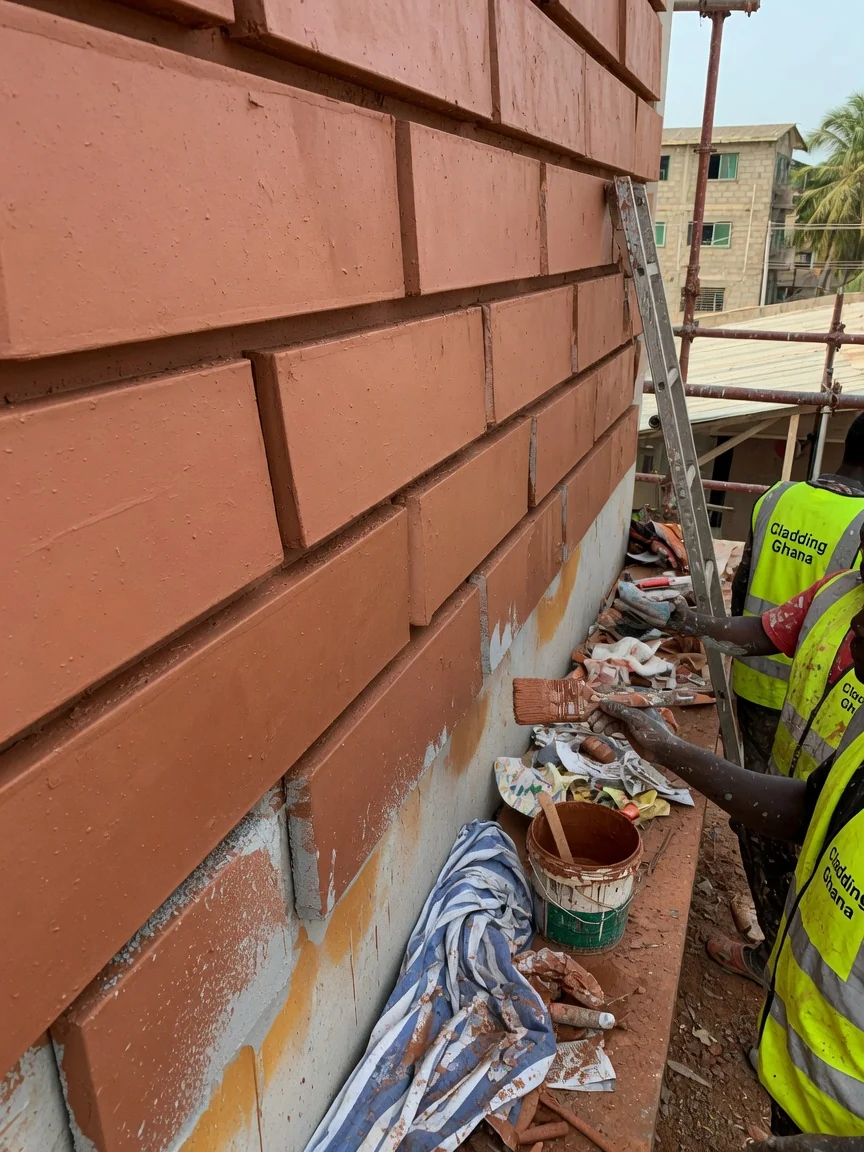
Flat extruded clay tiles, hung or clipped onto horizontal rails in coursed or stack-bonded layouts. The classic terracotta wall — broad, planar, and available across the natural clay colour range with smooth, sand-faced or grooved surfaces.
Terracotta Baguettes (Linear Rods)
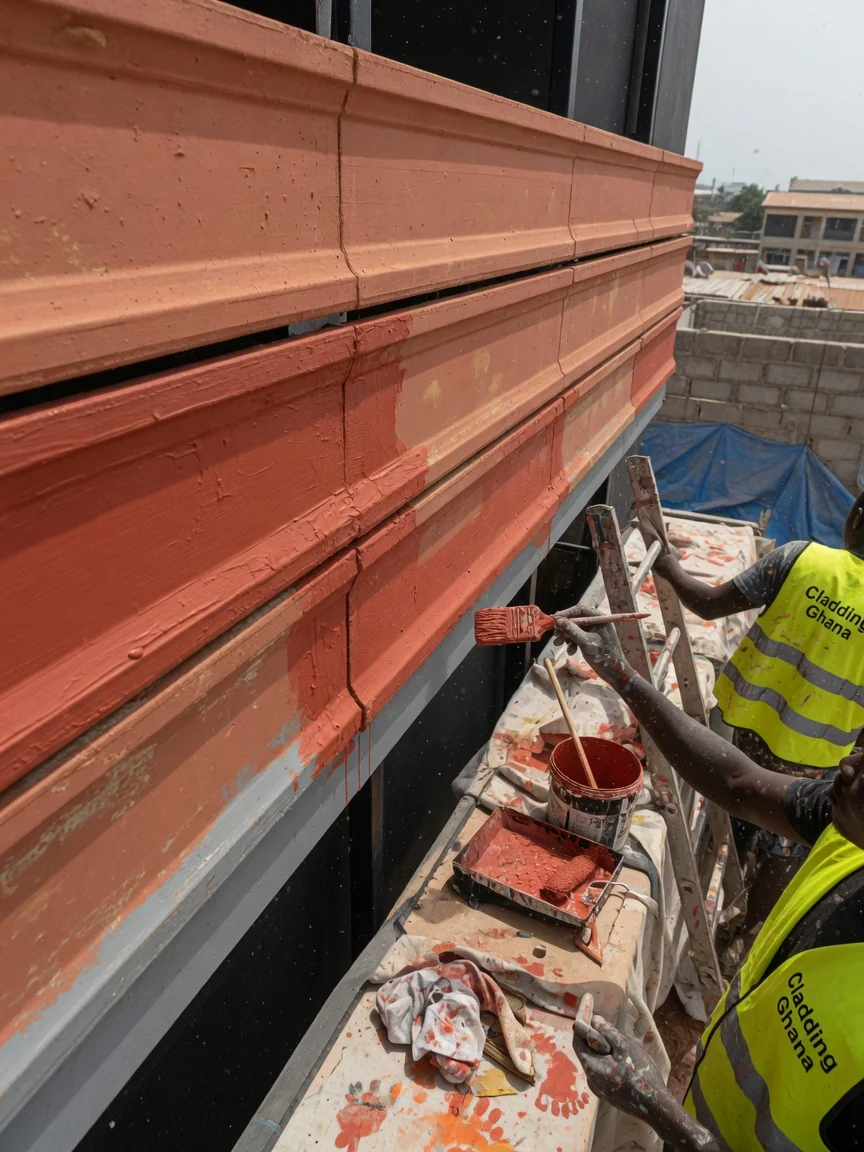
Extruded clay rods run horizontally or vertically as a louvre-like screen. Baguettes give a strong linear rhythm, can be spaced to act as a brise-soleil over glazing, and read very differently from flat tiles — favoured on hospitality and institutional façades.
Glazed & Textured Terracotta
The same fired body with a glazed, scratched or sand-faced surface for sheen, colour depth or a tactile texture. Glazing widens the colour range beyond the natural clay palette while keeping the through-body durability.
Terracotta Systems Compared
| System | Form | Look | Best for |
|---|---|---|---|
| Terracotta tiles | Flat extruded panels | Broad planar wall | Institutional, corporate, hospitality façades |
| Terracotta baguettes | Linear extruded rods | Louvre-like rhythm; sun-shading | Glazed elevations, brise-soleil, feature walls |
| Glazed / textured | Flat or rod, glazed/scratched | Sheen, depth, tactile surface | Feature elevations, wider colour palettes |
(Format, body and texture are selected on the project; we confirm the specific product and its data in writing.)
How We Install a Terracotta Rain-Screen
- Survey the wall and set the cavity — survey the structure, set out bracket lines, confirm the back-ventilated cavity depth.
- Fix the sub-frame and insulation — adjustable brackets and aluminium/steel rails set true and plumb; insulation held back to keep the cavity clear.
- Hang and align the terracotta — tiles or baguettes mechanically fixed (hung, clipped or screwed, never glued); joints kept open for drainage and airflow.
- Detail, inspect and hand over — corners, reveals, soffits and movement joints detailed; façade inspected; panel data and fixing layout handed to the owner.
Materials & Real Standards
- Material — natural fired clay (terracotta); colour is through the body from the clay and firing, not a surface paint, so it is UV-stable and does not corrode or rot
- System principle — back-ventilated rain-screen: open joints + a ventilated cavity drain and dry the wall; the terracotta is mechanically fixed, never bonded
- Façade performance — air leakage, water penetration and wind/structural load on the assembled system are assessed by methods such as ASTM E283 (air), ASTM E331 (water penetration) and ASTM E330 (structural/wind load)
- Fixing — mechanical fixing to an engineered aluminium or steel sub-frame; each tile individually removable for repair
- We describe terracotta’s weathering and durability qualitatively from the material itself; we do not quote a fire or product number a specific product has not been certified to, and we provide the actual product data on the project
What Affects the Cost
- The format — flat tiles vs extruded baguettes vs glazed/textured
- The clay body, surface finish and colour range
- The sub-frame, bracket system and cavity detailing
- Building height, exposure and access
- Area, corners, reveals and movement-joint complexity
Terracotta is a premium, specification-grade façade and is quoted on survey — the format, height and access decide the figure. Indicative material bands and the full cost picture are on the Cladding Cost Guide.
Applications Across Ghana
- Hotel and hospitality façades in Airport City and East Legon
- Corporate and institutional buildings in Ridge, Cantonments and the CBD
- Cultural, educational and civic buildings wanting a warm, natural skin
- Baguette brise-soleil screens over glazed elevations for solar shading
- Commercial and institutional projects in Kumasi and Takoradi
Areas We Serve
Cladding Ghana specifies and installs terracotta rain-screen façades across Greater Accra — Airport City, Ridge, Cantonments, the CBD, East Legon, and Tema — plus Kumasi and Takoradi.
Related Services
- Cladding Types Compared — terracotta vs ACP, ceramic, HPL, stone and more
- Cladding Cost Guide — indicative bands, material vs installed, on-survey honesty
- Ceramic Ventilated Façade — the ceramic alternative on a ventilated cavity
- HPL Cladding — compact high-pressure-laminate panels
- Stone Veneer Cladding — natural stone on a ventilated sub-frame
- Fibre-Cement Cladding — durable cement-composite boards
- Aluminium Composite Cladding — ACP panel façades
Frequently Asked Questions
What is a terracotta rain-screen? A façade of natural fired-clay tiles or baguettes mechanically fixed to a sub-frame in front of the wall, with a ventilated cavity behind. Rain crossing the open joints drains and dries in the cavity instead of soaking the wall — the back-ventilated rain-screen principle. The terracotta is the weathering skin; the wall does the loadbearing.
Is terracotta cladding durable in the Ghana climate? Yes. Terracotta is fired clay — UV-stable, colour-stable, non-corroding — which suits Accra and coastal humidity. The ventilated cavity lets heat and moisture escape, and any damaged tile can be unclipped and replaced without disturbing the rest of the façade.
What colours and textures does terracotta come in? The natural clay range — reds, ochres, browns, greys, sands and near-whites — with smooth, sand-faced, scratched, grooved or glazed surfaces, plus baguettes for a linear rhythm. Colour is through the body, so it ages gracefully.
What does terracotta rain-screen cost in Ghana? It is a premium cladding above ACP and fibre-cement, and the installed figure depends on the format, sub-frame, height and access. We quote on survey — see the cost guide for indicative bands and what drives the figure.