
Aluminum Composite Cladding
Aluminum composite cladding (ACP/ACM) as a façade substrate choice for Ghana — what the core (PE, FR, A2) means, how it performs against EN 13501-1, ASTM E283/E331/E330, where it fits versus other claddings, and honest cost. Cladding Ghana, since 1983.
Aluminum composite cladding (ACP/ACM) is a panel of two thin aluminium skins bonded either side of a core, fixed to a sub-frame over a ventilated cavity to form a building façade. It is the most widely specified commercial cladding substrate because it is light, flat, fast to install and available in almost any colour and finish. Cladding Ghana has specified and installed façade systems across Ghana since 1983 — and as a substrate-agnostic cladding contractor, our job is to tell you where aluminum composite is the right choice, and where it is not.
Why ACP Is a Substrate Choice, Not a Default
The Ghana market routinely sells “ACP” as if every panel were the same. It is not. Two ACP façades can look identical and behave completely differently in a fire, because the aluminium skins are the same and only the core changes. Choosing aluminum composite — and choosing its core — is a specification decision that should be made against the building’s height, use and occupancy, and weighed honestly against other substrates before it is committed to.
Choosing the Core
PE (Polyethylene) Core — Combustible
A 100% polyethylene core. Combustible, and the core type involved in the Grenfell Tower fire. Not appropriate for façades on tall or occupied buildings. Where it appears, it is usually because it is the lower-priced option and the core was never disclosed.
FR (Fire-Retardant) Core
Roughly 70% mineral filler in the core, which substantially reduces combustibility. Typically specified where a B-class reaction-to-fire is acceptable for the building.
A2 (Mineral-Filled) Core — Limited Combustibility
Over 90% mineral filler. Classified A2-s1,d0 under EN 13501-1 — limited combustibility, limited smoke (s1), no flaming droplets (d0). The highest fire class an ACP achieves, and the right specification for high-rise, hospitals and institutional buildings.
ACP Cladding Systems
Cassette (Rout-and-Return) System
Panels are routed and folded into trays fixed back to the sub-frame with concealed brackets — the standard premium commercial finish, with crisp shadow gaps and a fully ventilated cavity behind.
Riveted / Through-Fixed Panels
Flat panels fixed through the face with colour-matched rivets. A lower-priced, faster system for utilitarian and budget-led commercial work where a visible fixing pattern is acceptable.
Signage & Feature Panels
ACP’s flatness and colour range make it the default for façade signage, brand bands, soffits and feature elements integrated into a larger cladding scheme.
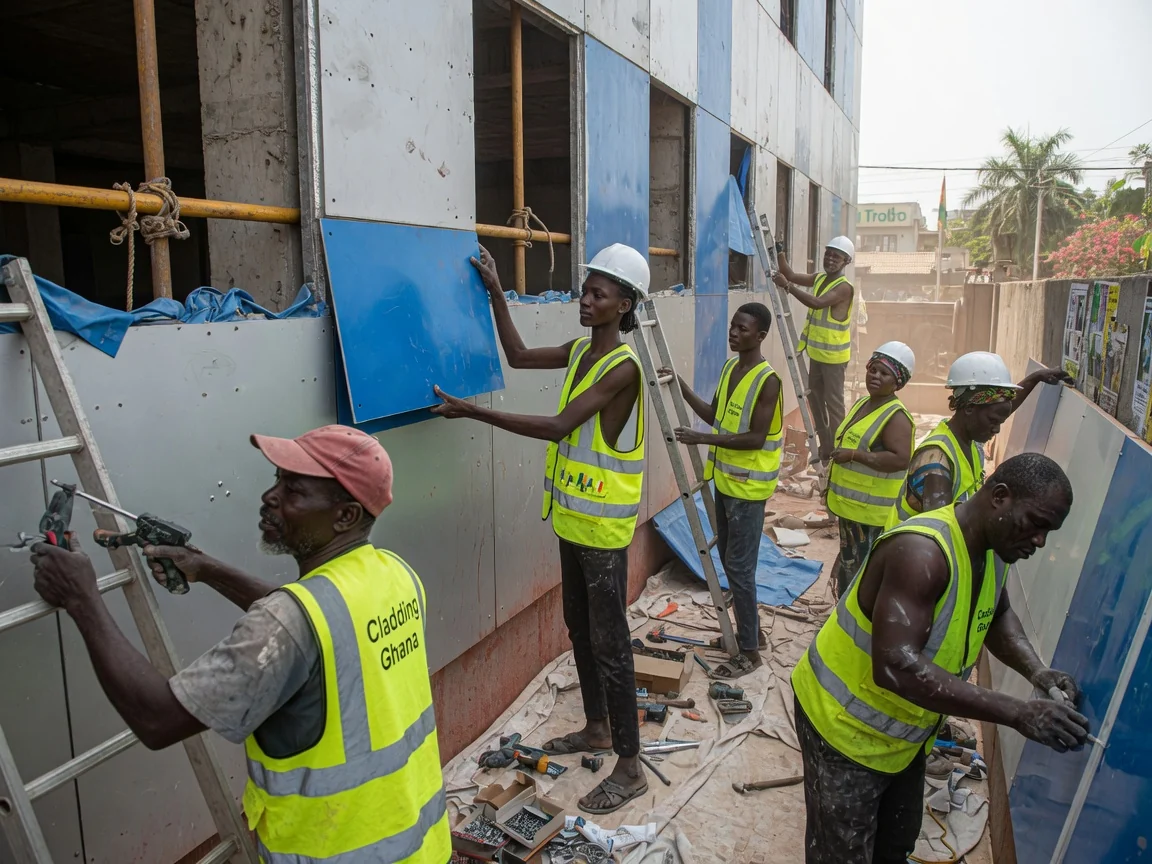
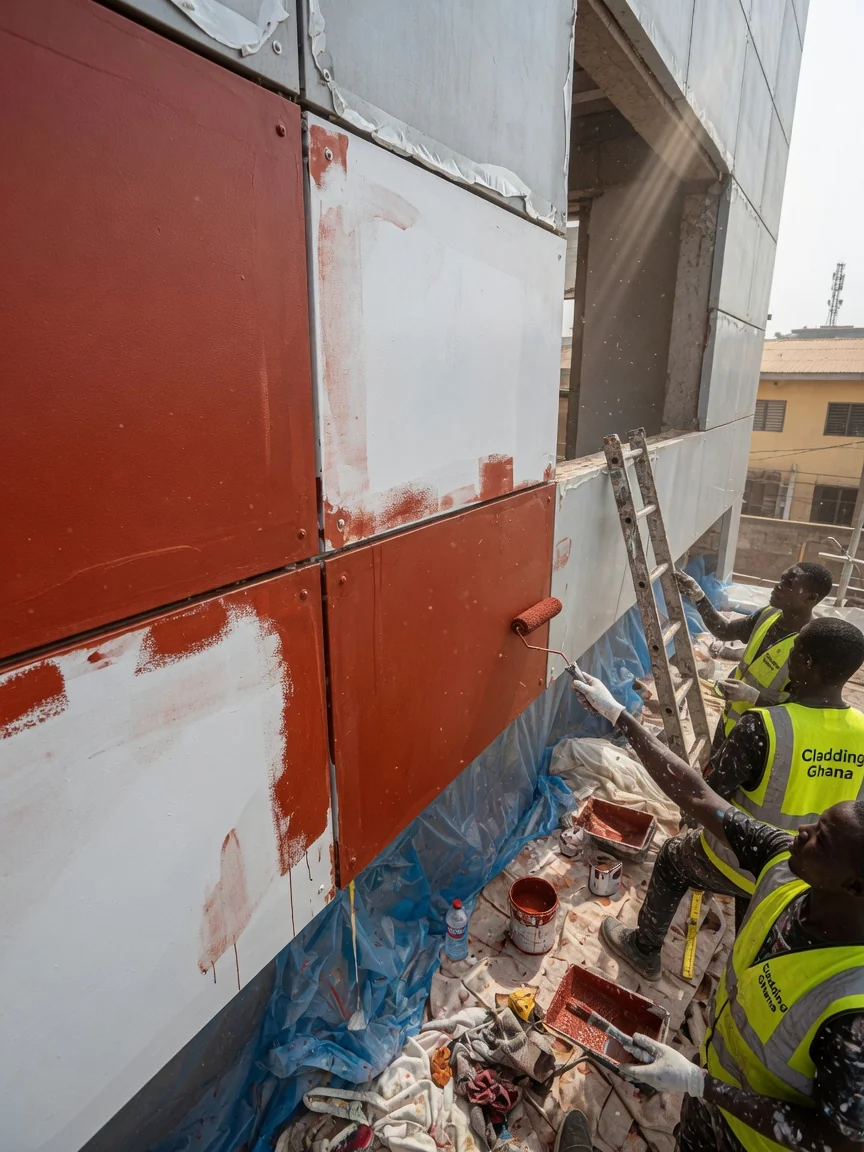
ACP Compared With Other Cladding Substrates
| Substrate | Weight | Surface durability | Fire (best core/grade) | Typically chosen for |
|---|---|---|---|---|
| Aluminum composite (ACP) | Light | Coating-dependent | A2-s1,d0 (A2 core) | Fast-track commercial, towers, signage |
| Ceramic / porcelain ventilated | Heavier | Very high | Non-combustible body | Durable rainscreen, institutional |
| Terracotta rainscreen | Heavier | High | Non-combustible body | Natural finish, premium façades |
| Fibre-cement | Medium | High | Non-combustible body | Mid-budget durable cladding |
(Fire behaviour depends on the specific product’s certification; we provide it in writing.)
How We Specify an Aluminum Composite Façade
- Confirm ACP is the right substrate — weigh height, use and budget against ceramic, terracotta, fibre-cement, stone and metal before committing.
- Name the core and document it — PE/FR/A2 + EN 13501-1 class + coating written into the spec.
- Engineer the carrier system — sub-frame, ventilated cavity, fixings and movement joints as a system.
- Install, inspect and hand over the paper trail — panel data sheets and classifications handed to the owner.
Materials & Real Standards
- Core grades — PE (combustible), FR (~70% mineral filler), A2 (>90% mineral filler, A2-s1,d0)
- EN 13501-1 — European reaction-to-fire classification (Euroclass A1, A2, B… with s = smoke and d = droplet sub-classes); A2-s1,d0 is the target for a non-combustible ACP
- ASTM E283 — air leakage of the assembled façade
- ASTM E331 — water penetration under static pressure
- ASTM E330 — structural performance under wind load
- Coatings — PVDF, PE or FEVE finish, specified for weathering and colour retention in the tropical climate (separate from the fire question)
- Panels are standard 1220×2440mm at 3–6mm; the ventilated back-drained cavity carries moisture away and keeps the wall behind dry
What Affects the Cost
- The core specified (PE vs FR vs A2 — the fire-rated cores cost more, and are worth it where required)
- Panel thickness (3–6mm), coating (PVDF/PE/FEVE), alloy and finish (RAL/Pantone, anodised)
- The sub-frame, cavity detailing and movement joints
- Area, building height and access
Loose 3mm ACP sheets are listed locally around GH₵315/sheet, and imported panel material is roughly US$2–8/m² at the budget end — but those are material-only references that exclude the frame, fabrication, fixings and installation. The installed figure for a commercial façade is quoted on survey, where panel grade, height and access decide the number. Indicative references and the full cost picture are on the Cladding Cost Guide.
Applications Across Ghana
- Corporate HQ and bank towers in Airport City, Ridge and the CBD
- Hospitals, hotels, malls and high-occupancy buildings where A2 non-combustibility is specified
- Fast-track commercial fit-outs and retail façades on tight programmes
- Façade signage, brand bands, soffits and feature panels
- Commercial and institutional projects in Kumasi and Takoradi
Areas We Serve
Cladding Ghana specifies and installs aluminum composite façades across Greater Accra — Airport City, Ridge, Cantonments, the CBD, East Legon and Tema — plus Kumasi and Takoradi.
Related Services
- Cladding Types Compared — ACP vs ceramic vs terracotta vs metal
- Cladding Cost Guide — GH₵/US$/CFA, material vs installed
- Ceramic Ventilated Façade — durable porcelain rainscreen
- Fast-Track Commercial Cladding — programme-led ACP work
- HPL Cladding — high-pressure laminate panels
Frequently Asked Questions
What is aluminum composite cladding (ACP/ACM)? A panel of two thin aluminium skins bonded either side of a core, fixed to a sub-frame over a ventilated cavity. Light, flat, fast and available in almost any colour — which is why it dominates commercial façades. The critical detail is the core: PE, FR or A2, classified to EN 13501-1. We name the core rather than selling unmarked “ACP”.
Is aluminum composite cladding fire-safe? It depends entirely on the core. PE is combustible (the Grenfell material); FR (~70% mineral filler) burns far less; A2 (>90% mineral filler) is A2-s1,d0 under EN 13501-1 — the highest ACP class. We specify the core to the building and document the class in writing.
When should I choose ACP over ceramic or terracotta cladding? ACP suits fast-track commercial work, large flat panel runs, towers and signage-led façades. Ceramic or terracotta rainscreens suit projects wanting greater surface durability and a natural mineral finish. We tell you honestly where each fits.
What standards apply to an ACP façade? Panel reaction-to-fire is classified to EN 13501-1; the assembled façade is assessed for air leakage (ASTM E283), water penetration (ASTM E331) and wind load (ASTM E330). We document against the standard relevant to the project.