
Fiber-Cement Cladding
Fibre-cement board and plank cladding for Ghana: a non-combustible (A2/A1 reaction-to-fire concept), durable, paintable façade for warehouses, commercial and residential buildings — rainscreen or direct-fix, engineered as a system and handed over in writing. Cladding Ghana, since 1983.
Fibre-cement cladding is a board or plank façade made of cement, sand and cellulose fibre — a non-combustible, dimensionally stable, paintable material that gives warehouses, commercial buildings and homes a durable rainscreen or direct-fix skin. As a broad cladding-systems specialist, Cladding Ghana’s job is not to sell one material — it is to tell you which substrate is right for your building and then to engineer it. Fibre cement earns its place when you want non-combustibility, low maintenance and a paintable finish without the cost of metal or stone.
Why Fibre Cement, and Why the Substrate Decision Comes First
Two façades can use the same fibre-cement board and perform completely differently, because the board is only one part of the system — the substrate, the cavity and the detailing decide whether the wall drains, dries and lasts. Fibre cement is chosen for three honest reasons: it is non-combustible, so it removes the combustible-core risk that PE-core composite panels carry; it is durable and rot-proof in coastal humidity; and it is paintable, so colour is a design choice rather than a fixed material property. The substrate choice — rainscreen versus direct-fix — is made first, against the building, before any board is selected.
Choosing Your Fibre-Cement System
Flat Sheet (Board) Cladding
Large-format flat sheets for clean, modern commercial and institutional façades. Through-coloured or factory-painted, hung on a sub-frame as a ventilated rainscreen for the best moisture performance, or direct-fixed on simpler walls.
Plank (Weatherboard) Cladding
Horizontal or vertical planks for a lap or board profile, common on residential and light-commercial buildings. Site-paintable or pre-finished, fixed to battens with a drained cavity behind.
Ventilated Rainscreen Build-Up
The board hung on a sub-frame with a continuous air cavity behind it, so the wall drains and dries. The right build-up for commercial and institutional façades and for high-exposure walls.
Direct-Fix Build-Up
The board mounted onto a backing without a drained cavity — simpler and lower-cost, suited to warehouse and residential walls where a full rainscreen is not required.
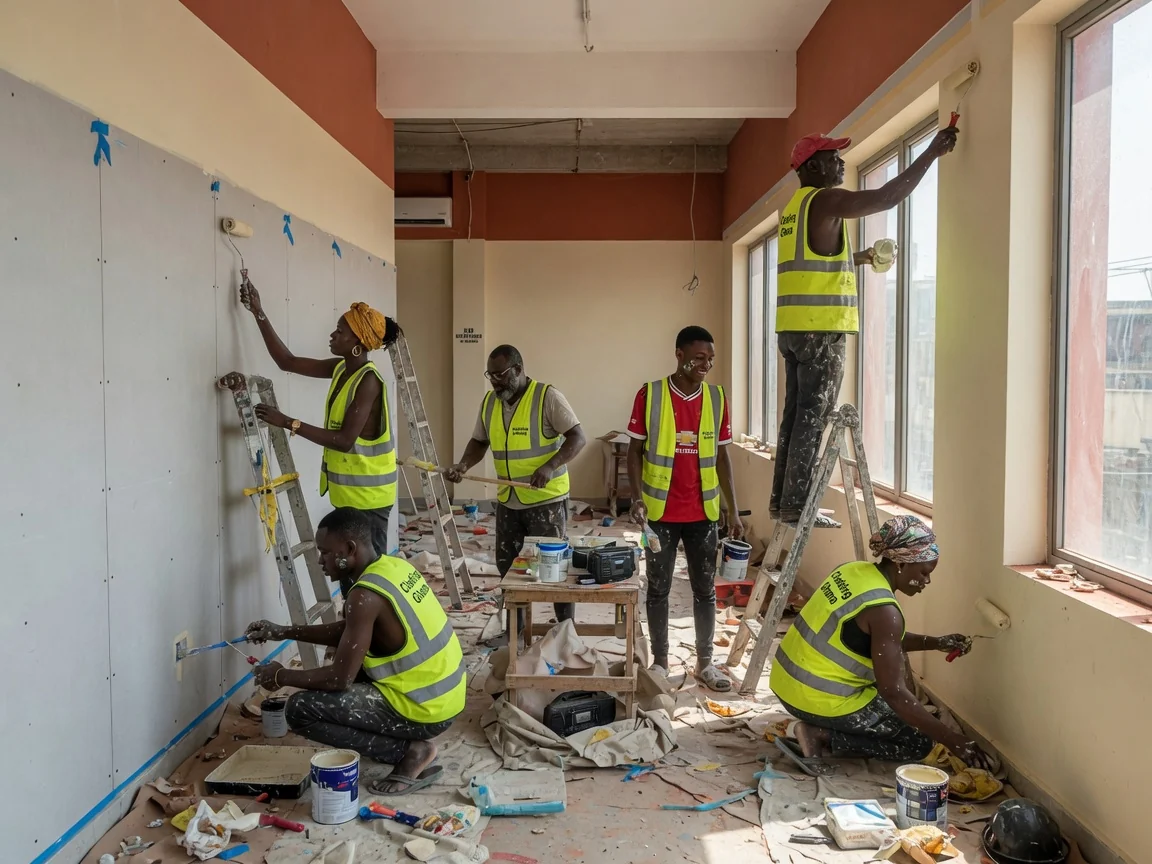
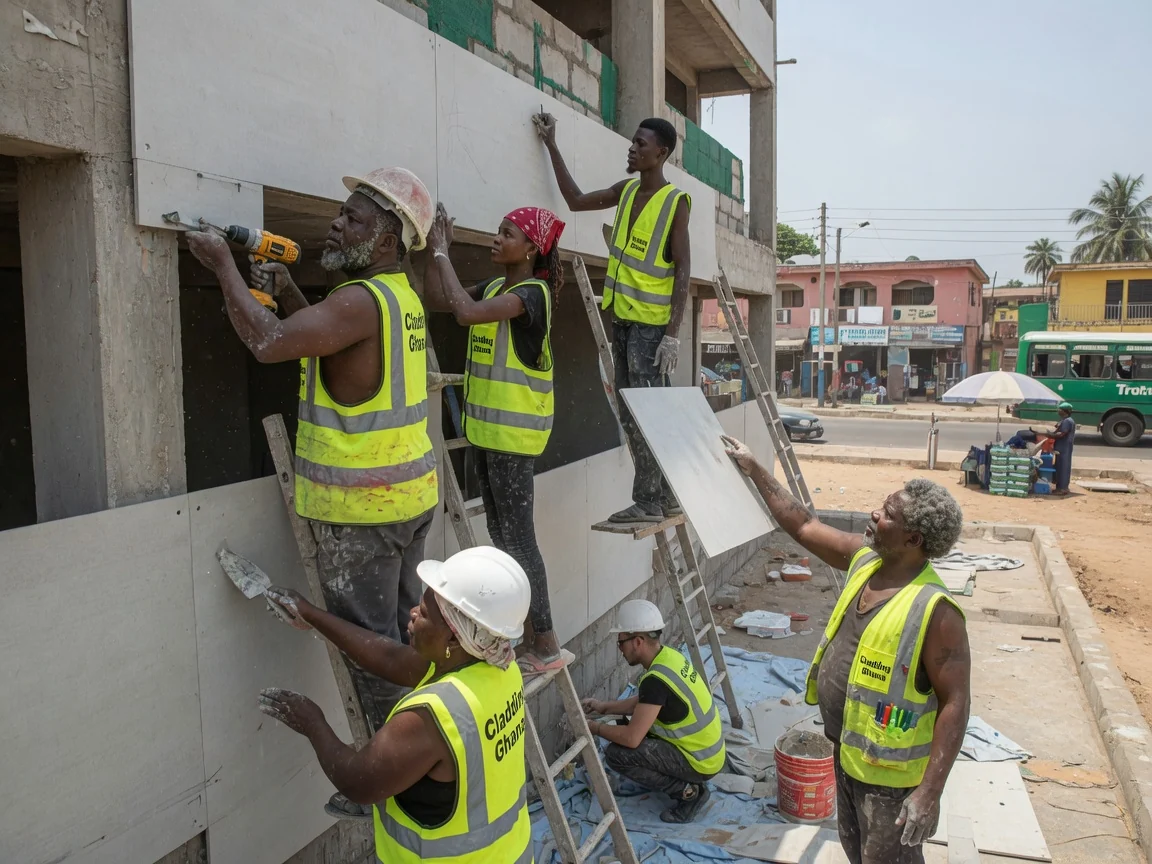
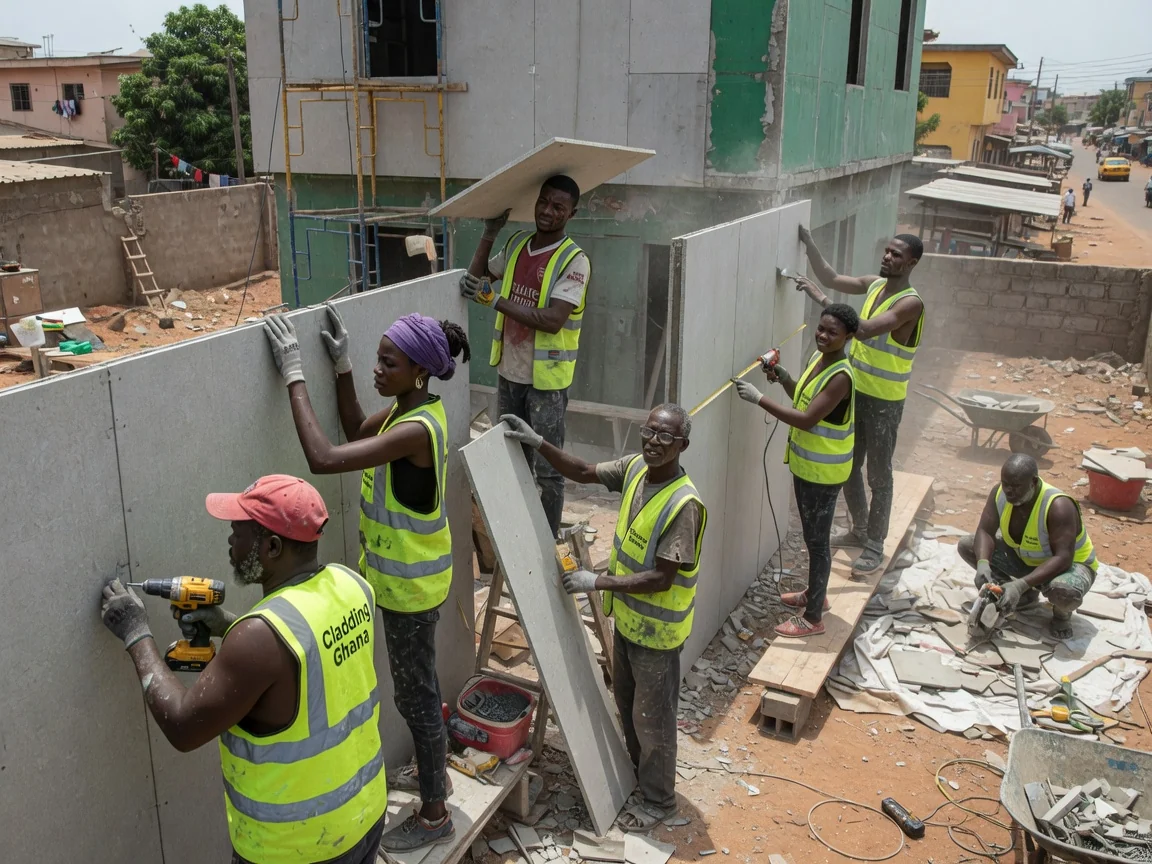
Fibre-Cement Systems Compared
| System | Build-up | Best for | Finish | Notes |
|---|---|---|---|---|
| Flat sheet | Rainscreen or direct-fix | Commercial, institutional | Through-colour / factory paint | Large-format, modern |
| Plank / weatherboard | Battens + cavity | Residential, light commercial | Site- or factory-paint | Lap or board profile |
| Ventilated rainscreen | Sub-frame + air cavity | High-exposure, commercial | Any board | Best moisture performance |
| Direct-fix | Board on backing | Warehouse, simple walls | Any board | Lower cost, no drained cavity |
(The right system is chosen on survey against the building, the exposure and the budget — we name it in the specification.)
How We Specify and Install a Fibre-Cement Façade
- Establish the requirement and the substrate — survey the building, confirm whether non-combustibility is required, and choose rainscreen versus direct-fix first.
- Select the board and document it — sheet or plank, thickness, finish and reaction-to-fire class written into the spec.
- Engineer the system — sub-frame, cavity, ventilation, fixings and movement joints engineered together.
- Install, inspect and hand over the paper trail — multi-stage QC, board data sheets and fixing schedule handed to the owner.
Materials & Real Standards
- Reaction to fire — fibre cement has no significant polymer content and is non-combustible, typically classified A1 or A2 under EN 13501-1 (the European reaction-to-fire classification, with s = smoke and d = droplet sub-classes); we name the actual class from the specific board’s certification rather than claiming a class it does not hold.
- Façade performance — a ventilated façade can be assessed for air leakage (ASTM E283), water penetration (ASTM E331) and structural / wind load (ASTM E330); we specify and document against the standard relevant to the project.
- Material properties — fibre cement is dimensionally stable, rot-proof, resistant to insects and humidity, and non-corroding; these are qualitative material strengths, not a single test number, and we describe them honestly.
- Finish — through-coloured, factory-painted or site-paintable, specified for colour retention and the maintenance plan (separate from the fire question).
What Affects the Cost
- The board chosen (flat sheet vs plank; through-colour vs factory paint vs site paint)
- The build-up (a ventilated rainscreen costs more than direct-fix, and is worth it where moisture performance matters)
- The sub-frame, cavity detailing, ventilation and movement joints
- Area, building height, and access
Indicative material references vary with board grade and finish; the installed figure is quoted on survey, because the substrate, height and access decide it. The full cost picture and the comparison against other substrates are on the Cladding Cost Guide — Ghana and Cladding Types Compared.
Applications Across Ghana
- Warehouse and logistics façades (Tema, Accra) where a durable, low-maintenance non-combustible skin is wanted
- Commercial and office buildings in Airport City, Ridge and the CBD
- Residential and light-commercial walls in East Legon and the suburbs, in plank or flat-sheet profile
- Schools, clinics and institutional buildings where non-combustibility is specified
- Commercial and residential projects in Kumasi and Takoradi
Areas We Serve
Cladding Ghana specifies and installs fibre-cement façades across Greater Accra — Airport City, Ridge, Cantonments, the CBD, East Legon, and Tema — plus Kumasi and Takoradi.
Related Services
- Aluminium Composite Cladding — ACP/ACM panel façades and fire-core choice
- Ceramic Ventilated Façade — ceramic rainscreen systems
- Stone-Veneer Cladding — natural stone veneer façades
- HPL Cladding — high-pressure laminate panels
- Terracotta Rain-Screen — baked-clay rainscreen
- Zinc & Copper Standing Seam — metal standing-seam façades
- Fast-Track Commercial Cladding — programme-driven commercial work
- Cladding Types Compared — substrate comparison matrix
- Cladding Cost Guide — Ghana — GH₵/US$/CFA, material vs installed
Frequently Asked Questions
Is fibre-cement cladding fire-safe? Fibre cement is made of cement, sand and cellulose fibre with no significant polymer content, so the board is non-combustible and typically achieves the highest reaction-to-fire classes (A1 or A2) under EN 13501-1. That makes it a sound substrate where combustible cores are a concern — but the cavity, fire barriers and fixings still have to be engineered, not just the board.
Can fibre-cement cladding be painted, and does it fade? Yes. Boards come through-coloured or factory-painted, and site-paintable boards can be re-coated later. Factory finishes hold colour longest; we specify the choice between through-colour, factory paint and site paint in writing against the building and the maintenance plan.
Rainscreen or direct-fix — which should I use? A ventilated rainscreen drains and dries the wall and suits commercial and institutional façades; direct-fix is simpler and suits warehouse and residential walls. We choose the build-up against the building and the exposure, not the lowest price.
How long does fibre-cement cladding last in Ghana’s climate? Fibre cement is dimensionally stable, rot-proof, insect- and humidity-resistant and non-corroding, which suits Accra’s coastal humidity and Ghana’s tropical climate. Service life depends on board quality, finish and detailing; a correctly engineered and ventilated system, handed over with its data sheets, is built to last the working life of the building.